The idea of identifying what is most appealing about a tree and making that feature more prominent through presentation is elemental to good bonsai design. Other teachers have taught this, but I learned it that day from Mr. Yoshimura, on this juniper specimen.
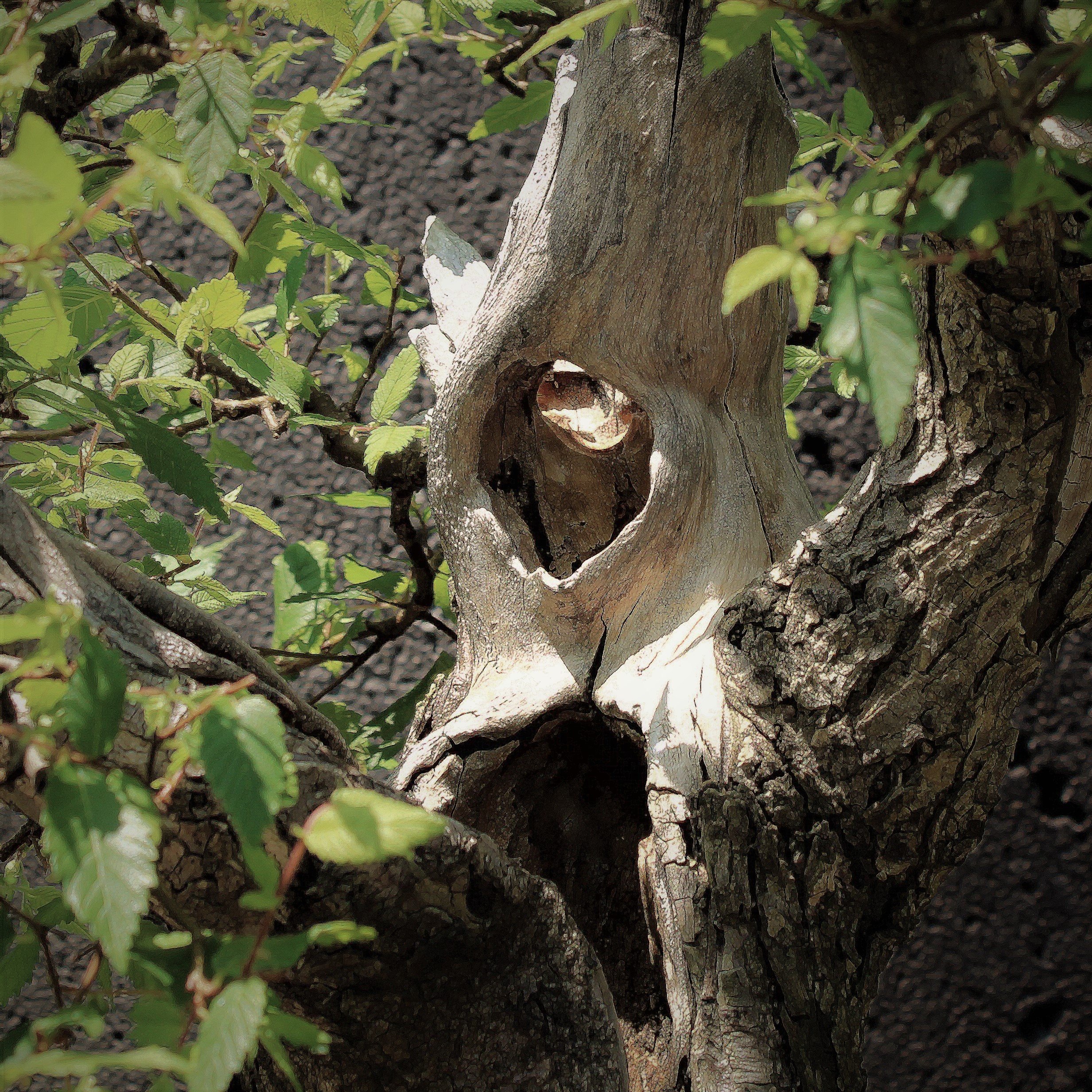
Read MoreIn 2018, eighteen years after being received in donation, I decided the time had come for this specimen to have its public debut and it was chosen to be the logo tree for the twenty-third Carolina Bonsai Expo. The unintended effect of the dangling branch revealed itself when I was making the Expo logo image. Suddenly what I saw before me took on a certain shape so clearly visible that once seen I couldn't un-see it. It was the image of a rearing horse.
Read MorePlans are all very well and good; I have made a few myself. Once you get underway your plan may or may not hold up to unfolding events. Unanticipated complications often arise, and then you face a choice of whether to stick to the plan or go with the flow. I remember reading that General Custer had a plan at the Little Bighorn, and he insisted on sticking with it even when reports started coming in that events on the ground were going awry.
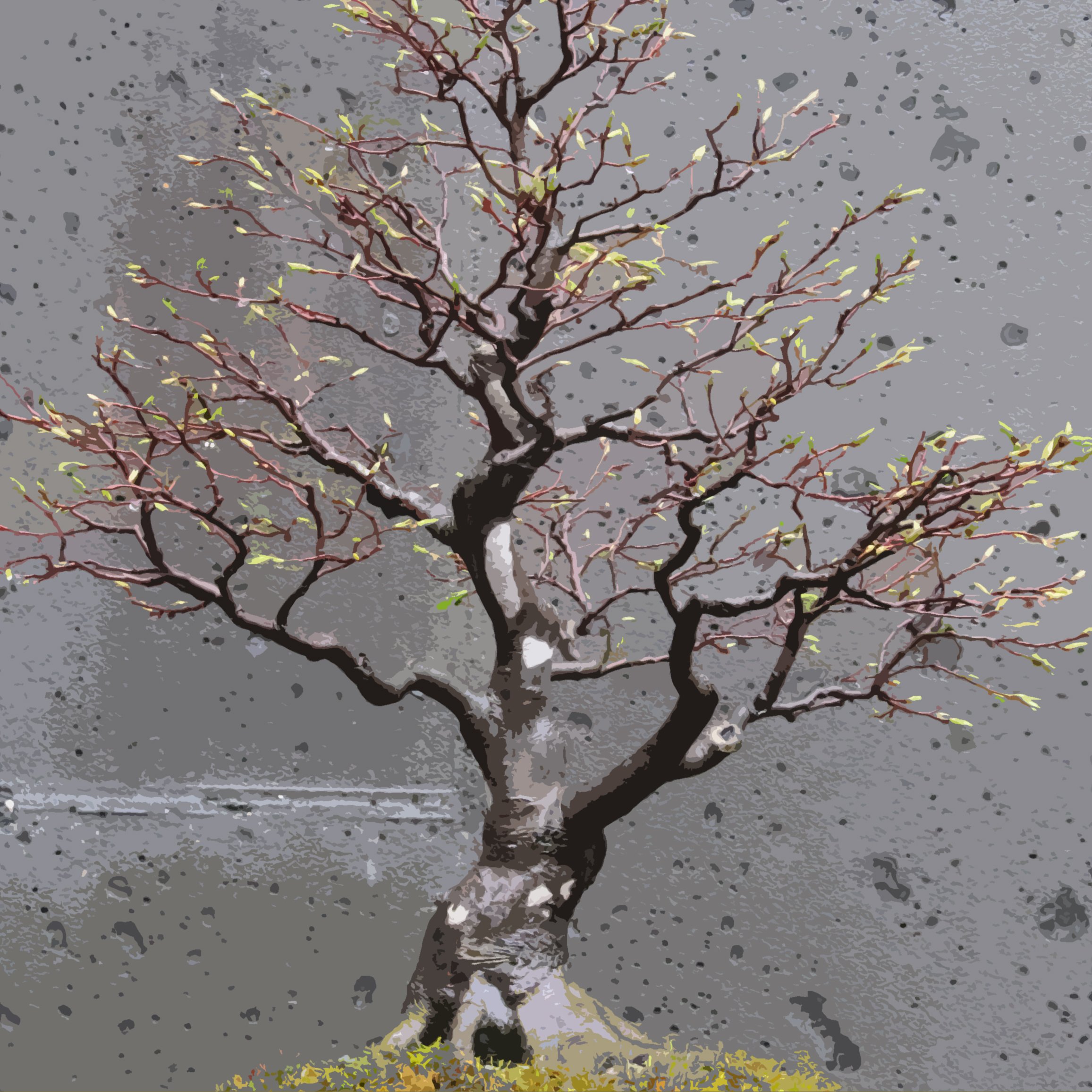
Read MoreAmerican hornbeam lacks the gaudy gene. It is an admirable tree species with four seasons of visual interest, but its appeal is understated and its virtues are so soft spoken that they are easily overlooked. I can't say I took much notice of American hornbeam either, until bonsai gave me reason to focus on it.
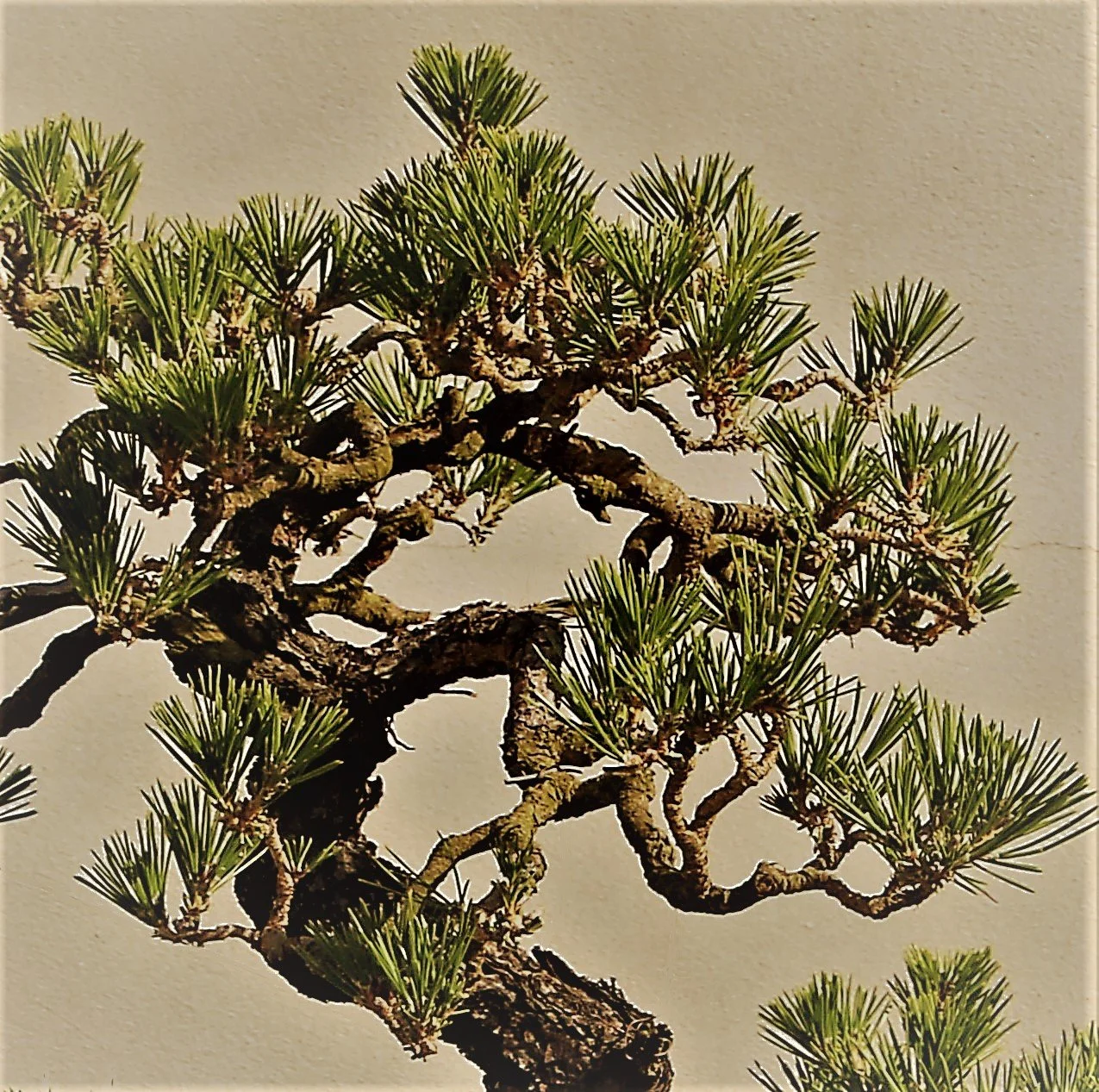
Read MoreThe challenge with this pine was not only to give it a new, more dynamic design, but to deal with an excess of long, leggy branches. A good many branches were removed in the demonstration, and others were intentionally killed but left in place on the tree as deadwood. This was the fate of that problematic lowest branch, which had been chronically weak from being in a disadvantaged position. Lack of light will no longer be an issue for that branch!
Read MoreBev cared deeply about bonsai and he recognized a situation was developing at this new public garden in Asheville that could have a far-reaching positive effect on the course of bonsai development in his home state — and maybe beyond. With our bonsai program only beginning to take shape, there was no guarantee it would ever amount to anything. Bev did what he could to ensure its success.
Read MoreWhen I found a lone American elm growing in a small plastic pot among the excess plants in the Arboretum's nursery, it had immediate appeal. The idea of making a bonsai out of a species so well known and badly troubled seemed a novelty, and at the very least it gave me the opportunity to protect this one individual tree. Though nothing about that particular elm, little more than a stick in a pot, suggested it would in any way make a good bonsai.
Read MoreThe telling of this particular tree's story should make one point plainly clear: It takes time to build a bonsai. Woody plants, even vigorous growers like American elms, develop at a rate most people find rather slow. On top of that the ability level of the person attempting to do the training of the plant has to be taken into account, and then come the hazards of chance along the way. Many plants are aimed for a bonsai future, but few actually make it.
Read MoreI forgot that I was looking at little Chinese elms growing in a shallow container and instead imagined them to be big buckeyes and yellow birches growing among the boulders on a windblown ridgeline. The tray landscape looked that believable to me. This seems implausible even as I write it.
Read MoreThis humble but durable little tree has a poetic name: Golden Heart. It can be said, and not inaccurately, that this poetic name refers to the beautiful golden yellow color the tamarack turns every autumn. A quietly glorious sight to see. This bonsai is called Golden Heart for another reason, though, and it is something few people know about.
Read MoreAunt Martha's Magic Garden was put together in a public demonstration. Twice. The first time was in spring of 2008. We had received the donation of the hinoki bonsai in early 2006, so there had been two years to get to know it, to look at it and think about it. I had decided the best way to utilize the tree was as the centerpiece of a tray landscape.
Read MoreWhat matters more, and the reason for detailing the history of this specimen, is the degree to which it has evolved. More than simply the product of normal aging, this particular black pine transformed the way it did because the person who grew it over the course of that time experienced an evolution of aesthetic sensibility.
Read MoreDissatisfaction was once again creeping in. The tree looked better to me now than it did when it was trying to be classical, that's for sure, but there was still much room for improvement….It was time to push the tree further along the path of design development.
Read MoreIt took a long time to build that bonsai. To change it would require some drastic alterations that would likely set the tree back a decade or so. Whenever considering such a move you have to question if the end result would warrant the effort. Every tree has a certain limited capacity for perfection.
Read MoreThere is a process at work here: Every year in spring the tree is cut back hard, then allowed to grow unrestrained for a year. Out of the new growth some new possibility might present itself, or some previous idea could be undone by what happens in the course of a year of unrestrained growth. Flexibility is necessary; the tree has some say in what it will ultimately look like.
Read MoreIt is possible, even likely, that the person who creates a particular piece of self expression, such as a bonsai, intends it to be perceived a certain way, to tell a certain story, but other people interpret it differently. There is nothing at all wrong with this. Ideas spark other ideas, and diversity is the catalyst in the evolutionary process that pushes all creation forward.
Read MoreThe Arboretum's collection has quite a few nice little trees with big, impressive trunks, and many of them were produced right here. How was it done? In-ground growing is the answer. Over the past 25 years or so, I've been refining my technique for producing small trees with large trunks. The new video presented here demonstrates part of the process.
Read More