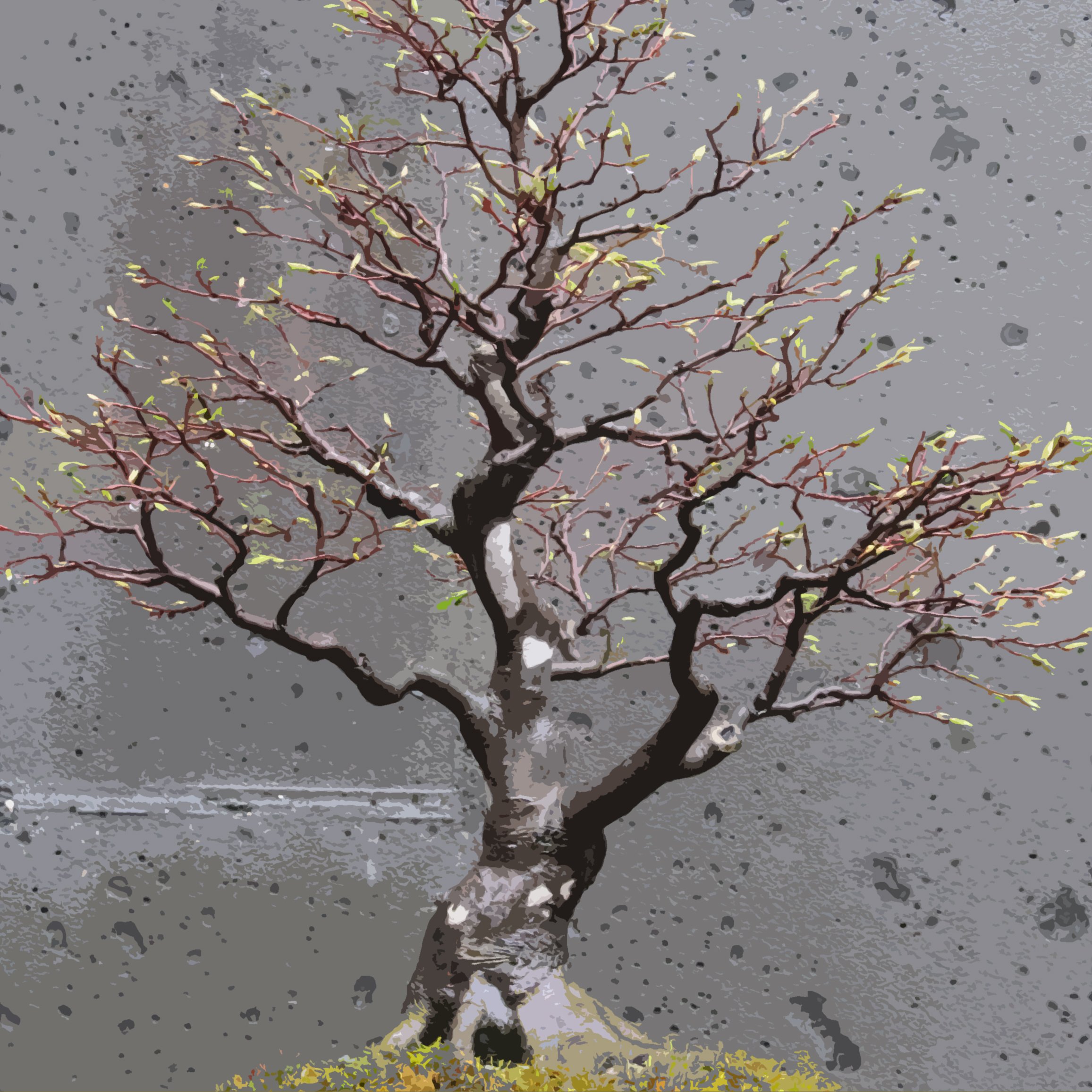
Heterogeneous Dwarf Eastern White Pine
In the case of this dwarf white pine, I decided it was not worth undoing what had been accomplished because I could not think of a better tree to make out of what already existed. If this bonsai were a maple or hornbeam, it could be pruned back hard to nothing much more than a trunk and a new design could be constructed from the resulting regrowth. Pines are different.
Read More
How We Started
When the Arboretum accepted the unsolicited donation of a bonsai collection and I was offered the job of caring for the little trees, I tried to turn down the assignment. I was happy doing what I was doing at the time, which was most often manual labor out on the Arboretum property. We were outside most of the time, working on our own with more than four hundred wooded acres to keep us busy, and we rarely saw anyone else all day.
Read More
Making Conversation
What do you want to be when you grow up? That is a standard question older people feel obliged to ask the young, or so it was when I was younger and I suspect the question is still out there. The older person who asks the question is only making conversation, trying to find out a little bit about you and what you are interested in.
Read More
The Circle Garden
The American hornbeam had previously been part of a different Arboretum landscape planting, but was removed because it had a more noticeably crooked trunk than the other trees with which it had been planted. The rejected hornbeam was in a storage area for several years when I noticed it and asked about its availability. The same crooked trunk that was previously seen as a flaw made the tree attractive for its new assignment.
Read More
From a Letter to a Fellow Curator
It was a beautiful day with soft clouds in a mild blue sky, and though it was rather warm back in town, up in the mountains there was a gentle cool breeze, and this was in the evening so as we walked along and time passed the descending sun began throwing long shadows and casting the earth in golden tones. The trees looked wonderful and this time I had my camera along.
Read More
Whose Art is it Anyway?
In bonsai, every piece that has been around for any substantial length of time has been influenced by each and every person who has grown it. Bonsai is a collaborative art form, not only in the sense that multiple people can and do influence any given piece, but also in the sense that the living plant material contributes its own individual nature, as well.
Read More
Beginnings
Bonsai is a strange business, to begin with. It takes a tree, an object that is almost always larger than us, and represents it in a form that is almost always smaller than us. It takes a living entity that is literally rooted in the earth and removes it from that context, placing it instead within the confines of a container. It substitutes, in large part at least, ideals of human design for the random acts of nature, in developing the plant to a certain desired appearance. And to accomplish all this requires a great deal of time and effort on the part of the human who wants to do it.
Read More
Thoughts At the End of Year One
The Curator’s Journal began publishing the last Friday in March, 2022. That means this week's entry brings us around full circle and we now officially close out the first year of the course. Here at the juncture where one year ends and another is about to begin, it seems opportune to pause a moment and take in the scenery, looking back at where we've been and surveying what might be ahead.
Read More
Twists and Turns in the Life of a Corkscrewed Juniper
The idea of identifying what is most appealing about a tree and making that feature more prominent through presentation is elemental to good bonsai design. Other teachers have taught this, but I learned it that day from Mr. Yoshimura, on this juniper specimen.
Read More
Virginia
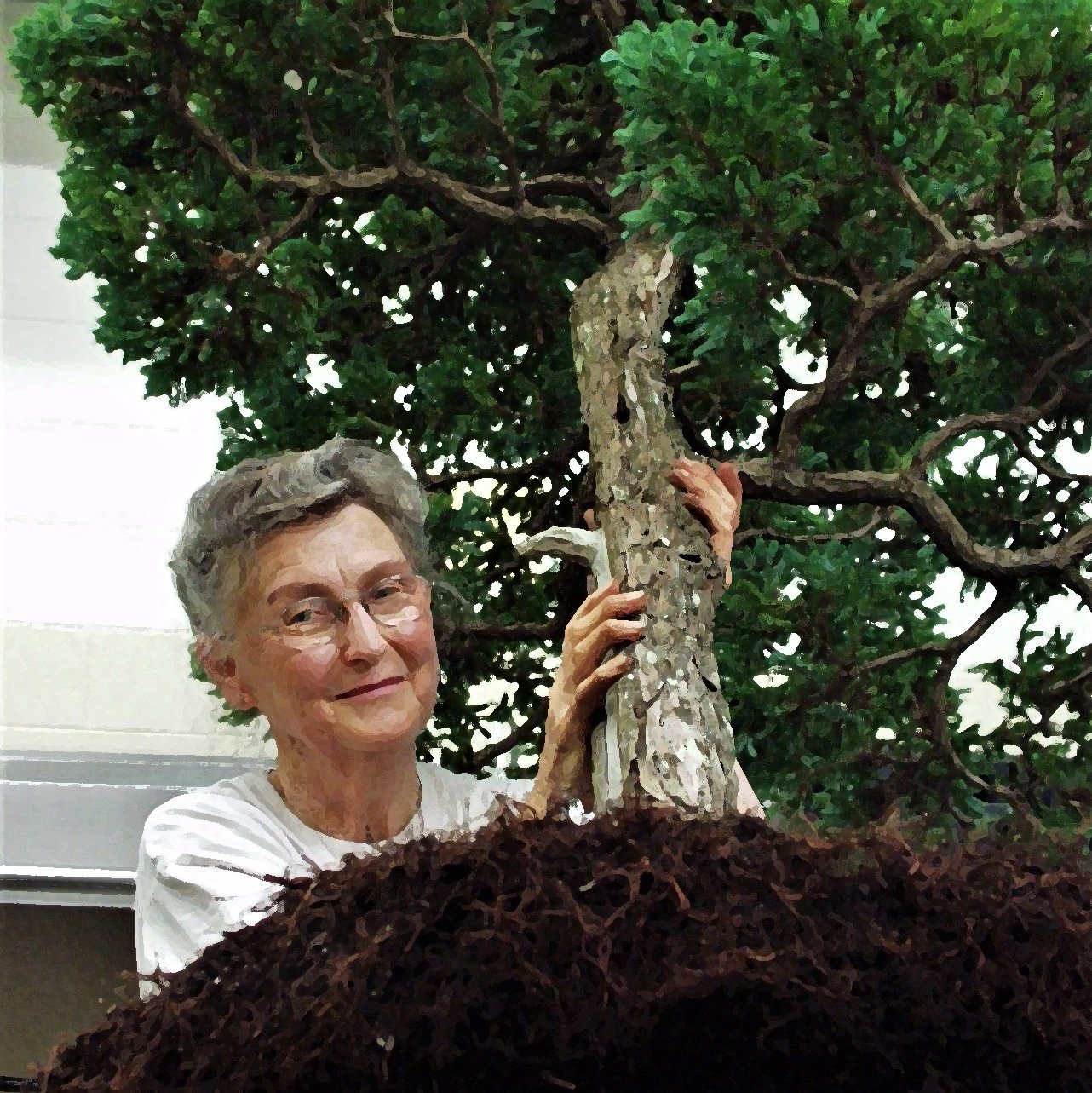
It's the detail work, the non-glamorous, time-consuming, tediously repetitive labor done with tools like tweezers and a dental pick, that really elevates the quality of a bonsai and makes it shine. Virginia went about her business with a seriousness of purpose and unremitting focus that belied any suggestion the work was menial.
Read More
Crazy Horse
In 2018, eighteen years after being received in donation, I decided the time had come for this specimen to have its public debut and it was chosen to be the logo tree for the twenty-third Carolina Bonsai Expo. The unintended effect of the dangling branch revealed itself when I was making the Expo logo image. Suddenly what I saw before me took on a certain shape so clearly visible that once seen I couldn't un-see it. It was the image of a rearing horse.
Read More
March
Naming March in honor of a mythological being who embodied both growth and devastation is entirely appropriate. This month may see the first tender young sprouts of green life emerging from fertile soil, but it may also see those same sprouts freeze and turn into dark brown slime a few days later. March is fickle. What's behind the door — the lamb or the lion?
Read More
Japan - Part 3
Now, twenty-five years later and with the advantage of hindsight, there are certain elements of my Japan experience that I recognize as having had more importance than previously acknowledged. It is time to shine some light on these matters.
Read More
Japan - Part 2
From Ryoanji we walk another fifteen or twenty minutes to Kinkakuji Temple, another truly outstanding site. The gardens are beautiful, but the real highlight is a golden temple, three stories high, sitting above a large pond that reflects the image. It's fantastic, dreamlike. I shoot a million pictures, but it's unlikely that I capture on film the shock of seeing such an amazingly wondrous thing for the first time.
Read More
Japan - Part 1
Even after years of pouring through books and magazines studying countless pictures of the great aged bonsai from Japan, nothing could have prepared me for the marvel of standing before the living trees themselves. All of them were apparently in perfect health, meticulously groomed, planted in exquisite containers, and everything I saw looked old.
Read More
February
A certain ephemeral effect that occurs only once every year can often be observed in February, especially toward the end of the month and in lower elevations. It is a small thing, a quiet thing, a detail that has to be looked for if it is to be noticed. But it is a heartening thing, a promising thing, a reminder that life ebbs and flows and the flowing is soon to begin.
Read More
Planning to be Spontaneous
Plans are all very well and good; I have made a few myself. Once you get underway your plan may or may not hold up to unfolding events. Unanticipated complications often arise, and then you face a choice of whether to stick to the plan or go with the flow. I remember reading that General Custer had a plan at the Little Bighorn, and he insisted on sticking with it even when reports started coming in that events on the ground were going awry.
Read More
As the Twig is Bent
Remember the adage that goes: "As the twig is bent so the tree is inclined"? It's an old saying, originally penned by poet Alexander Pope in 1732, and in full goes this way: "'Tis education forms the common mind, Just as the twig is bent the tree's inclined."
Read More
American Hornbeam
American hornbeam lacks the gaudy gene. It is an admirable tree species with four seasons of visual interest, but its appeal is understated and its virtues are so soft spoken that they are easily overlooked. I can't say I took much notice of American hornbeam either, until bonsai gave me reason to focus on it.
Read More
January
January is wintertime, generally cold and sometimes bitterly so, but there is something fresh and clean in the crisp austerity of a cold January day. This is the heart of the dormant season for temperate plants, but it is by no means a dull or dead time of year.
Read More