Further Adventures in Naturalistic Design
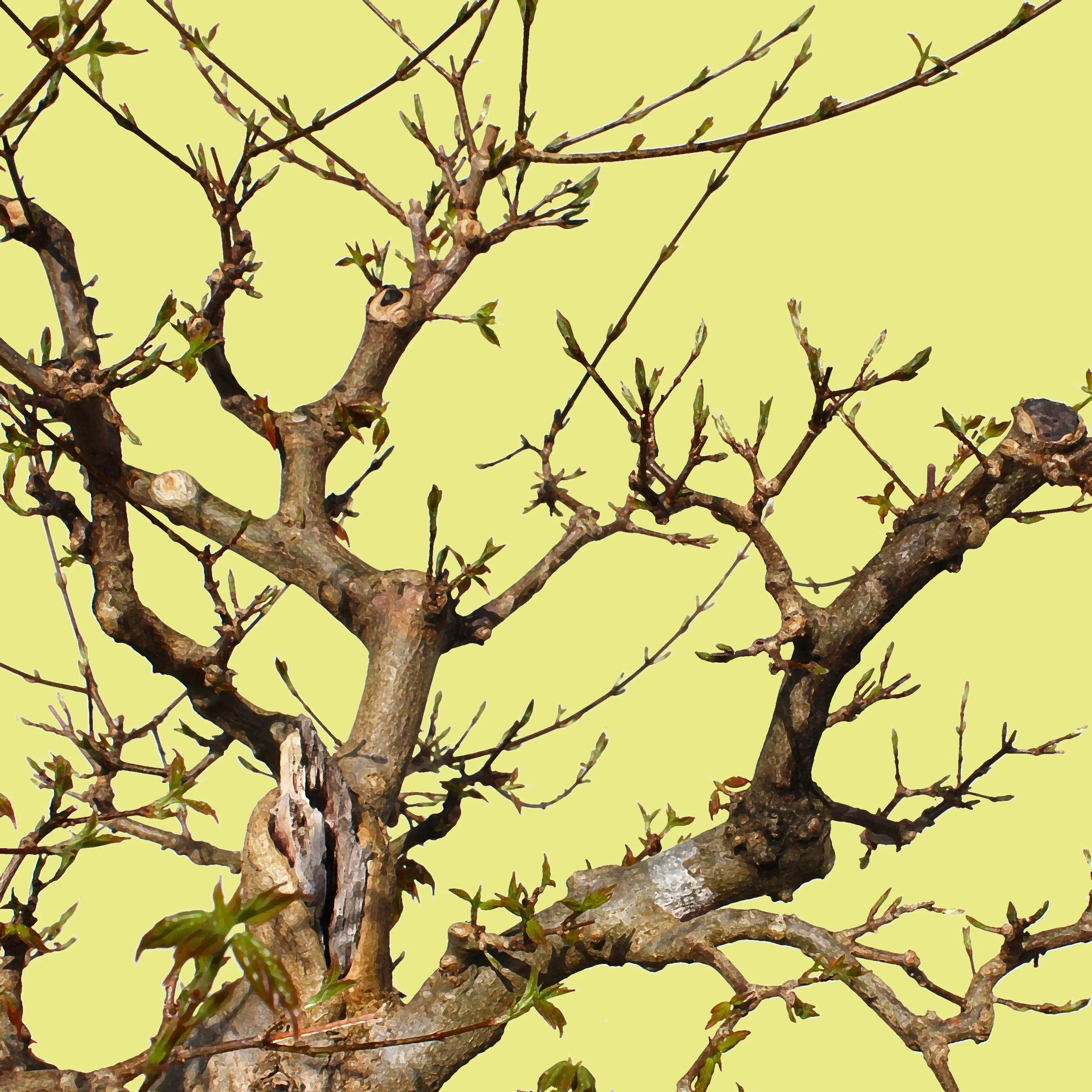
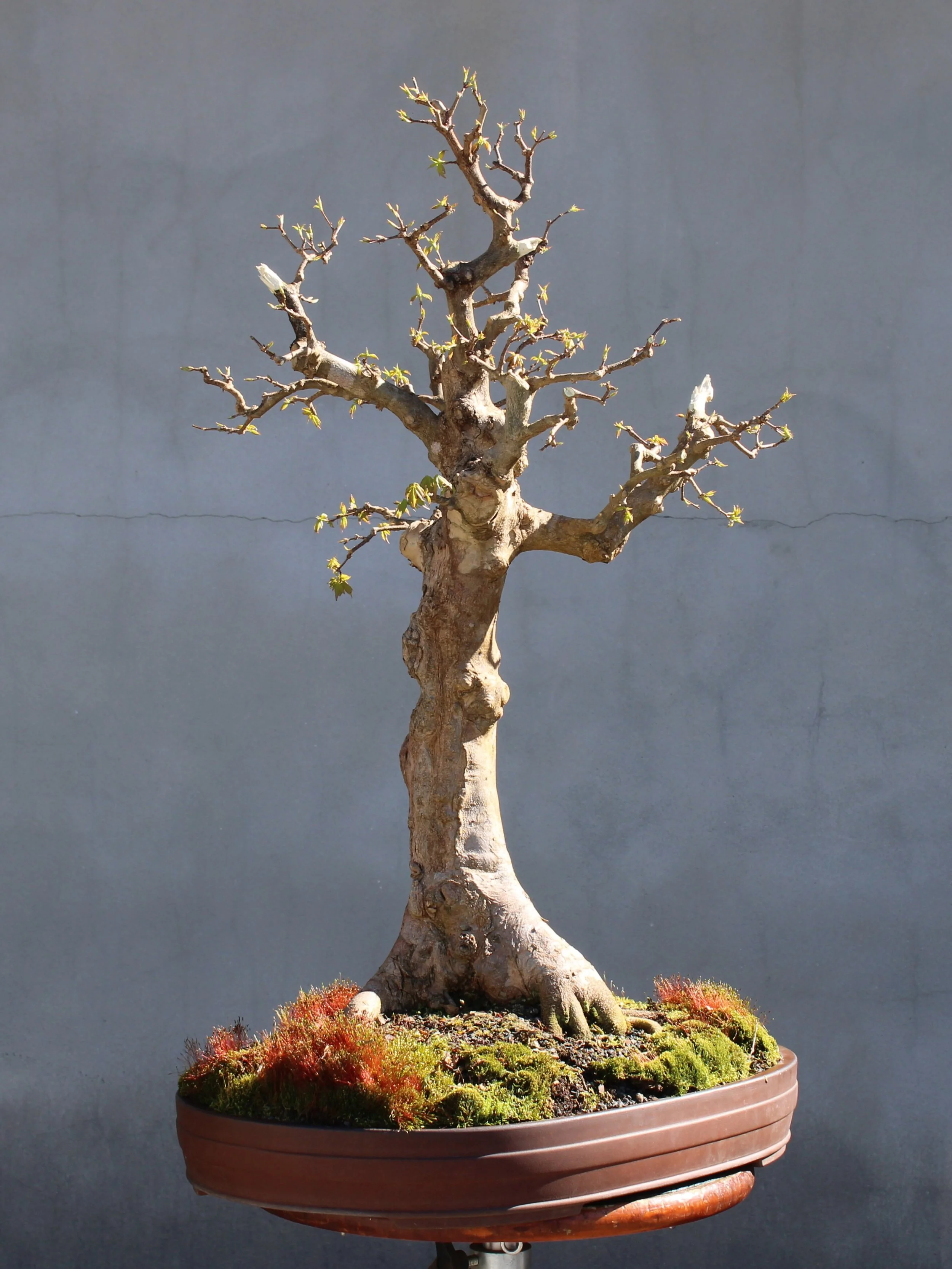
The trident maple (Acer buergerianum) featured in this entry has been the subject of several previous Curator’s Journal entries. By chance, the tree was collected from a growing bed shortly after the Journal started in spring of 2022, and that process was documented in a video which became an early entry. Subsequent developments with this specimen have been tracked in the years that followed. The thought process behind the naturalistic designing of this tree was fully articulated in a second entry in year two of the Journal. A third entry followed near the end of year three, and a fourth entry and fifth entry in year four continued the documentation. Now, as we embark on an unanticipated fifth year (!) of Curator’s Journal, the same maple is once more in the spotlight.
All of this has happened in an organic way. That is to say, there was no thought back when the initial video was made that it should be the start of a series detailing the naturalistic bonsai design process. This particular maple wasn’t consciously chosen for the assignment. Ironically, I’m still not certain this trident will ultimately make the grade and become a respectable, presentable specimen bonsai. I think it could and I hope it does, but the jury’s still out. The tree is so far responding well to everything that’s been done to it, and that makes the process engaging and encourages continued interest. I want to see what happens next. This is a great feature of bonsai as a creative expression — because you’re working with a living plant that is constantly in the act of changing, the ultimate look of the work is always in flux. There is an end to it, but you never want to get there.
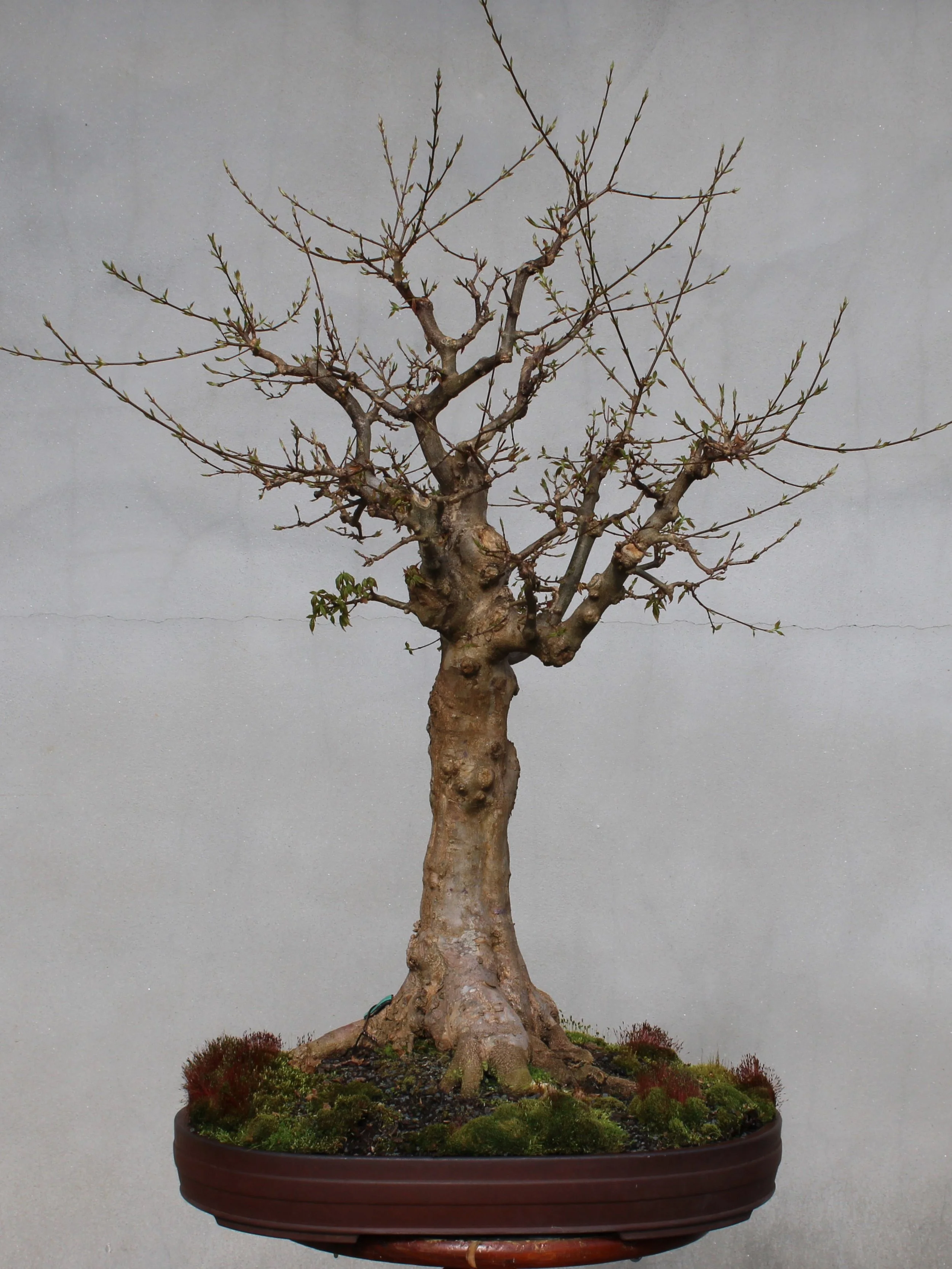
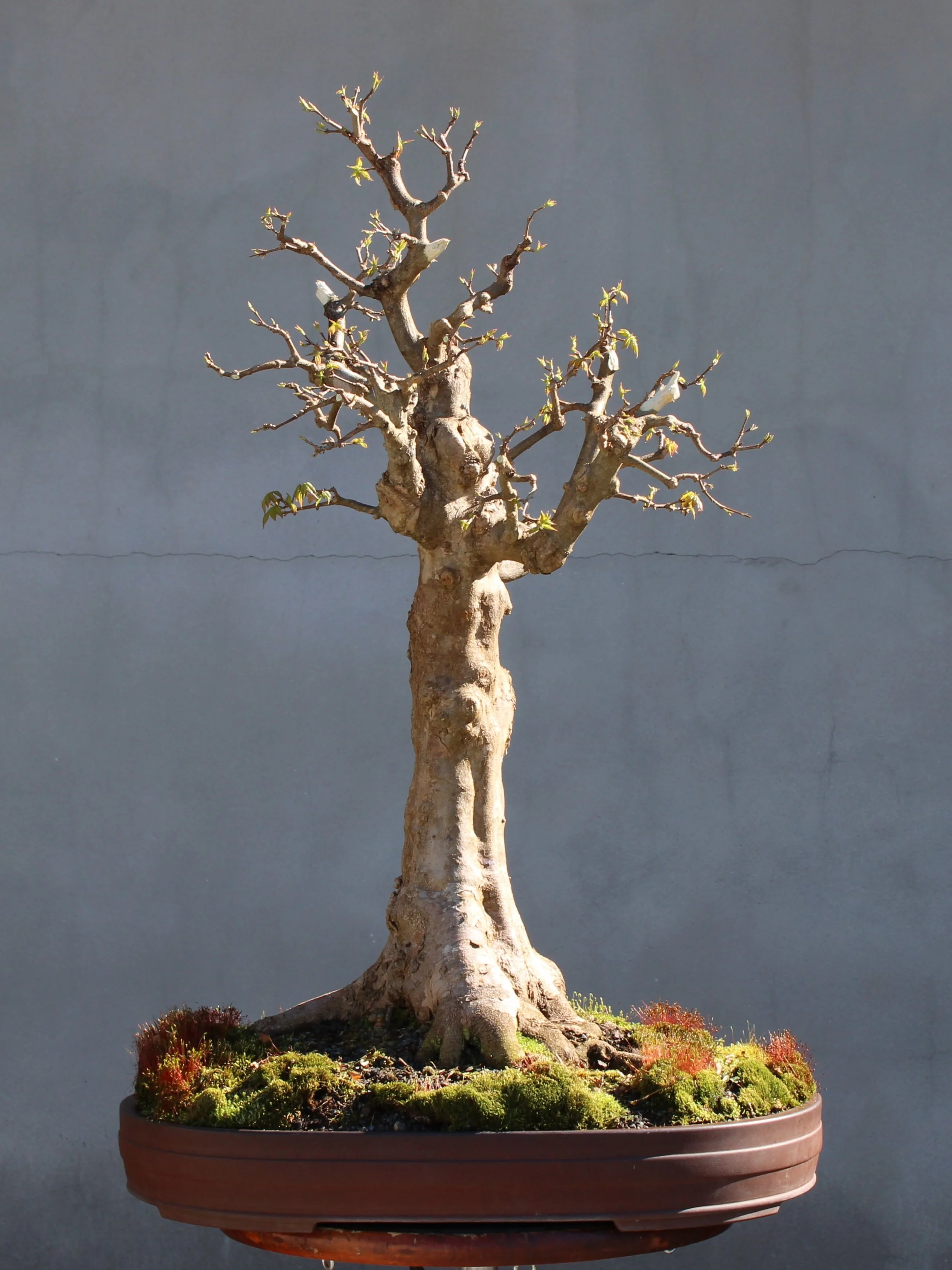
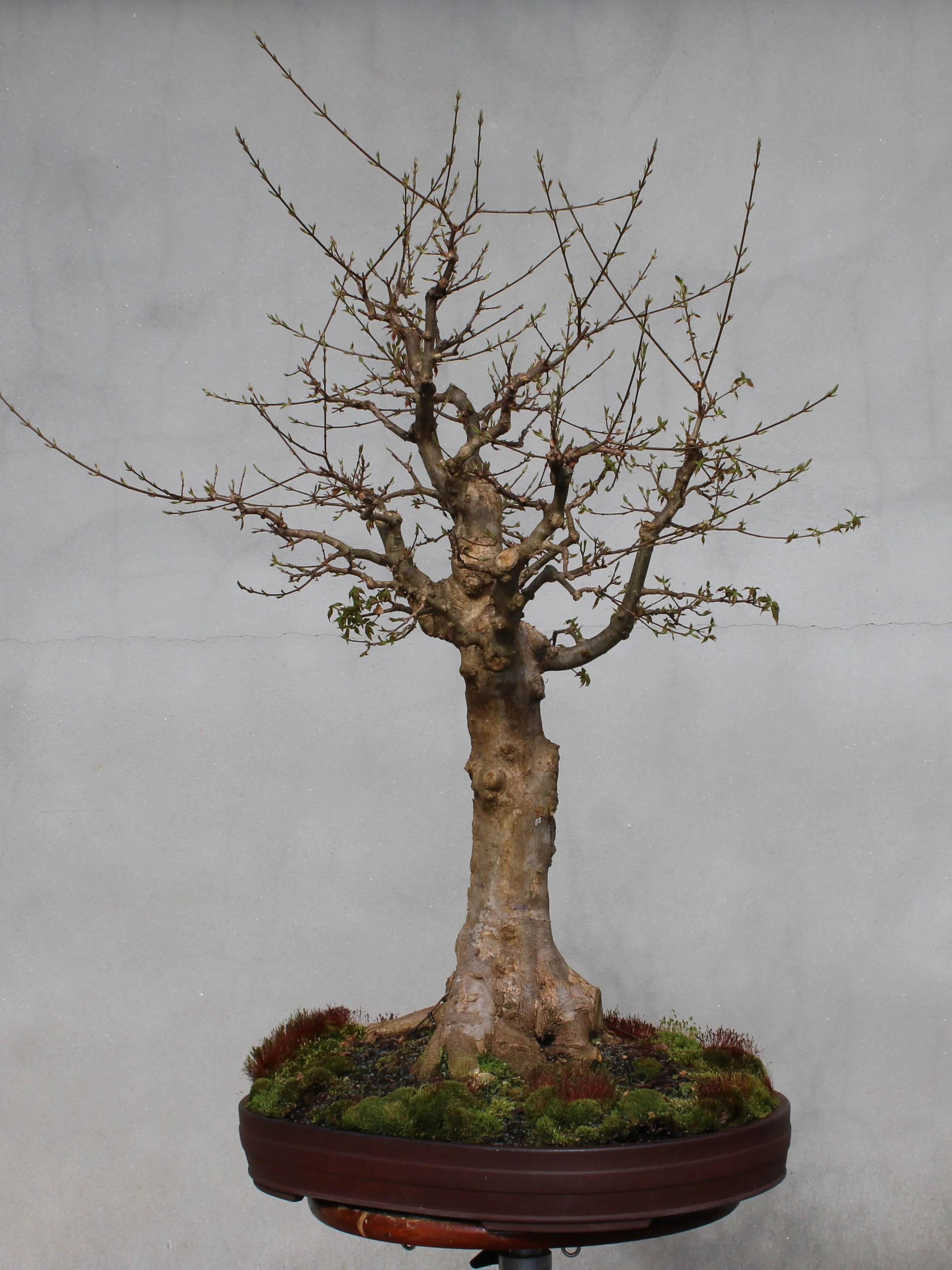
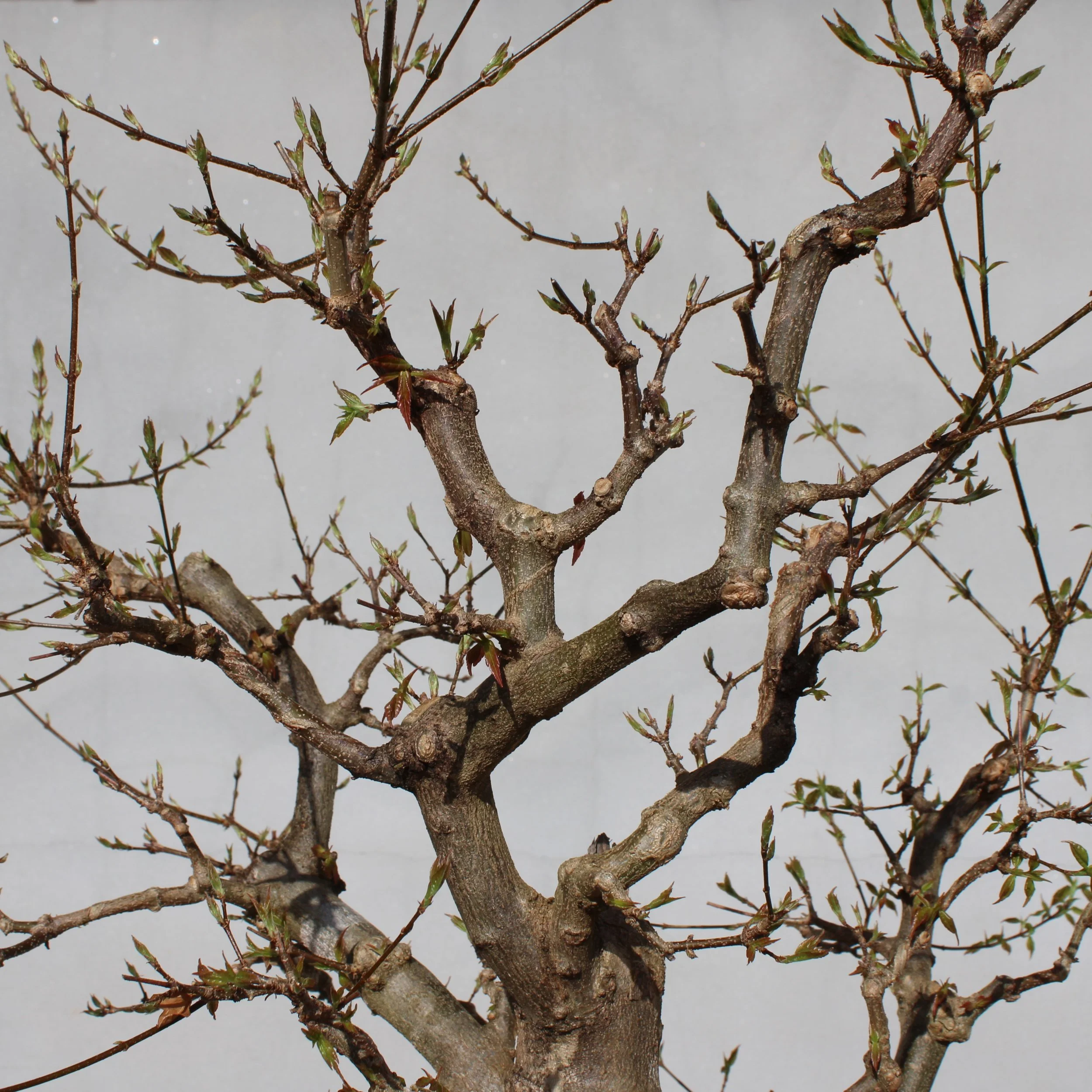
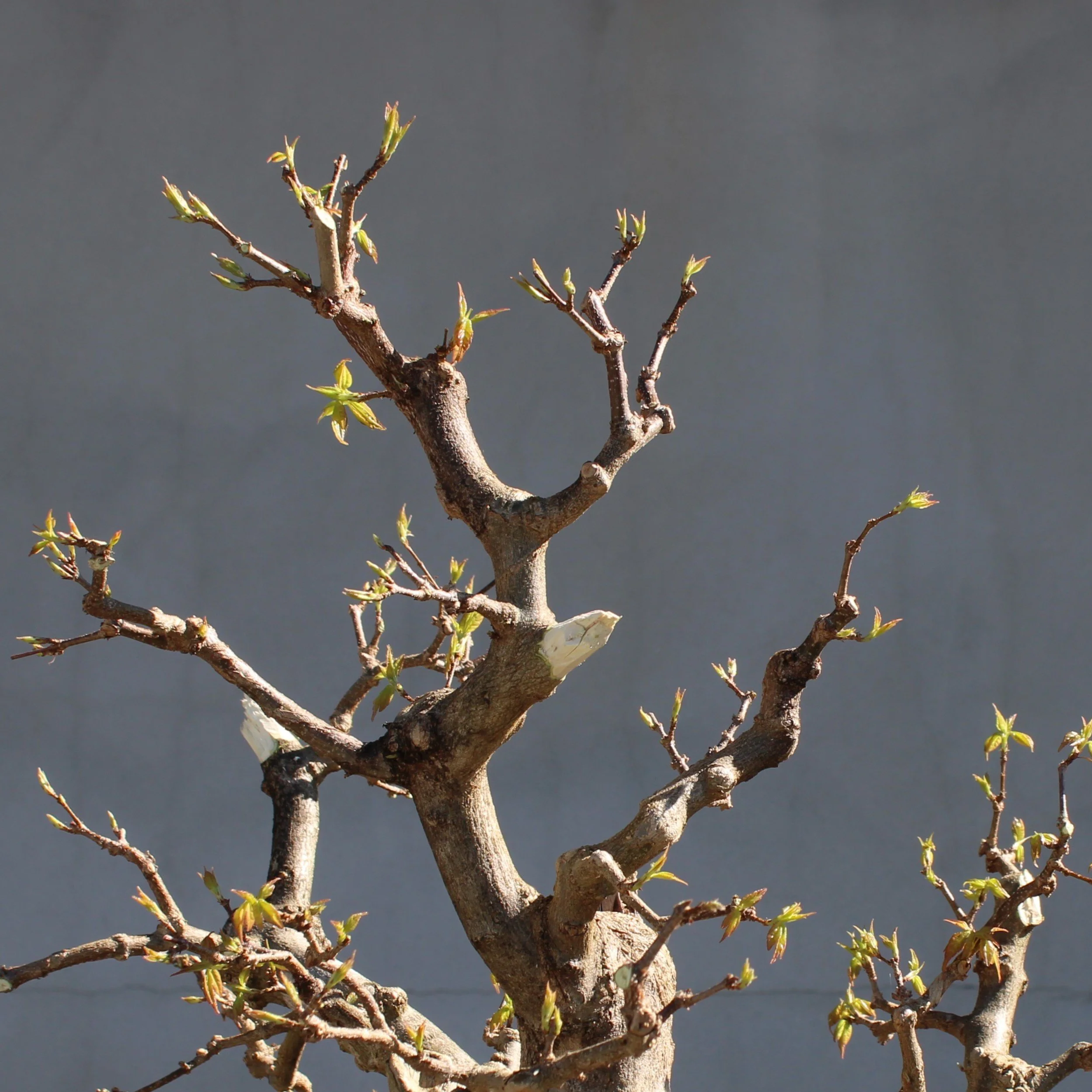
The developing trident maple was dramatically reduced in this latest round of work. I’ve had this substantial revision in mind for several months, visualizing possibilities each time I happened across the tree out in the hoop house and stopped to focus on it. The branching all looked too long to me. Of course, I’m the one who left all the branches long the last time I worked on the tree. Did I make a mistake? I make lots of mistakes, all the time, although leaving long branches on this tree wasn’t one of them. When I last worked on the trident I trimmed all the branches to the degree I saw clear to do so at the time. I strove to make the tree look right in the moment. The tree’s response came after that, playing out over the course of the last month of the growing season in the form of a final push of new growth. Autumn came and the maple leaves turned pretty colors and then dropped off, leaving the tree bare. Over the winter I observed the form of the tree, including the new growth it had produced, and visualized it as a full-sized tree in nature. Thinking critically with the natural example as my guide, I came to the conclusion that the length of the branches, as well as the degree to which they were straight as opposed to contorted, worked against the desired effect of an old tree.
To say it a different way, I changed my mind. Minds can get rigid and stuck if they aren’t opened up and changed every so often.
Trees in nature are not static things, despite all outward appearance. Trees are dynamic living organisms, constantly changing as they grow and constantly affected by their environment, which can change them further in profound ways. The older the tree, the greater the degree of change to which it has been subjected. That’s why old trees tell the best stories. That’s why bonsai people want their trees to look old.
How do you take a young tree and make it look old? That’s the question this series of entries about a trident maple undergoing naturalistic bonsai training seeks to answer. This exact same process has played out numerous times before on trees that are now established pieces in the Arboretum’s bonsai collection. The stories of several of these specimens, illustrated with photographs taken over the years of their development, have been previously featured in the Journal. In this instance, the process is being documented and shared in real time. Future installments concerning this tree will relay whatever happens next.
Here’s what happened this go-round:
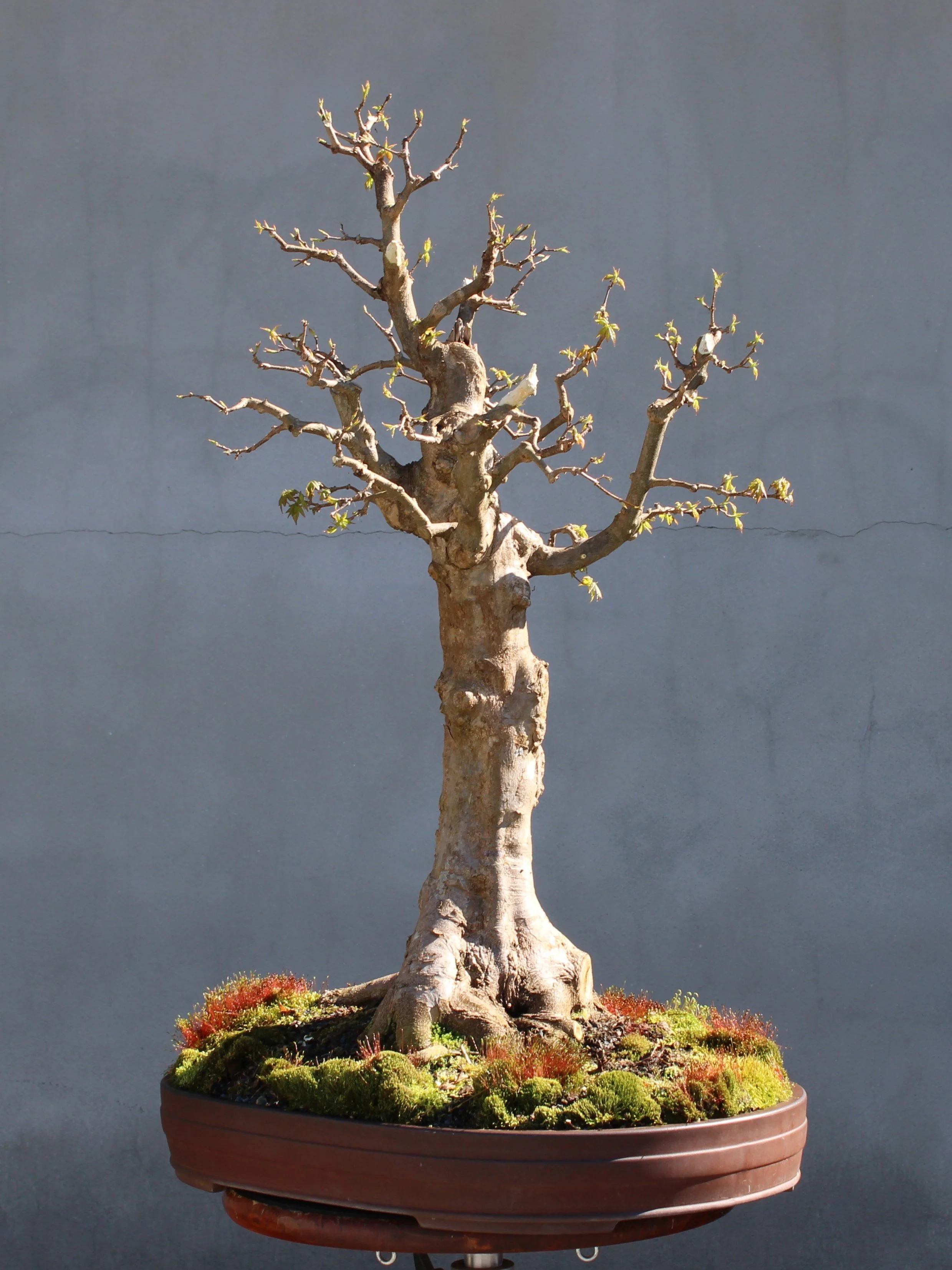
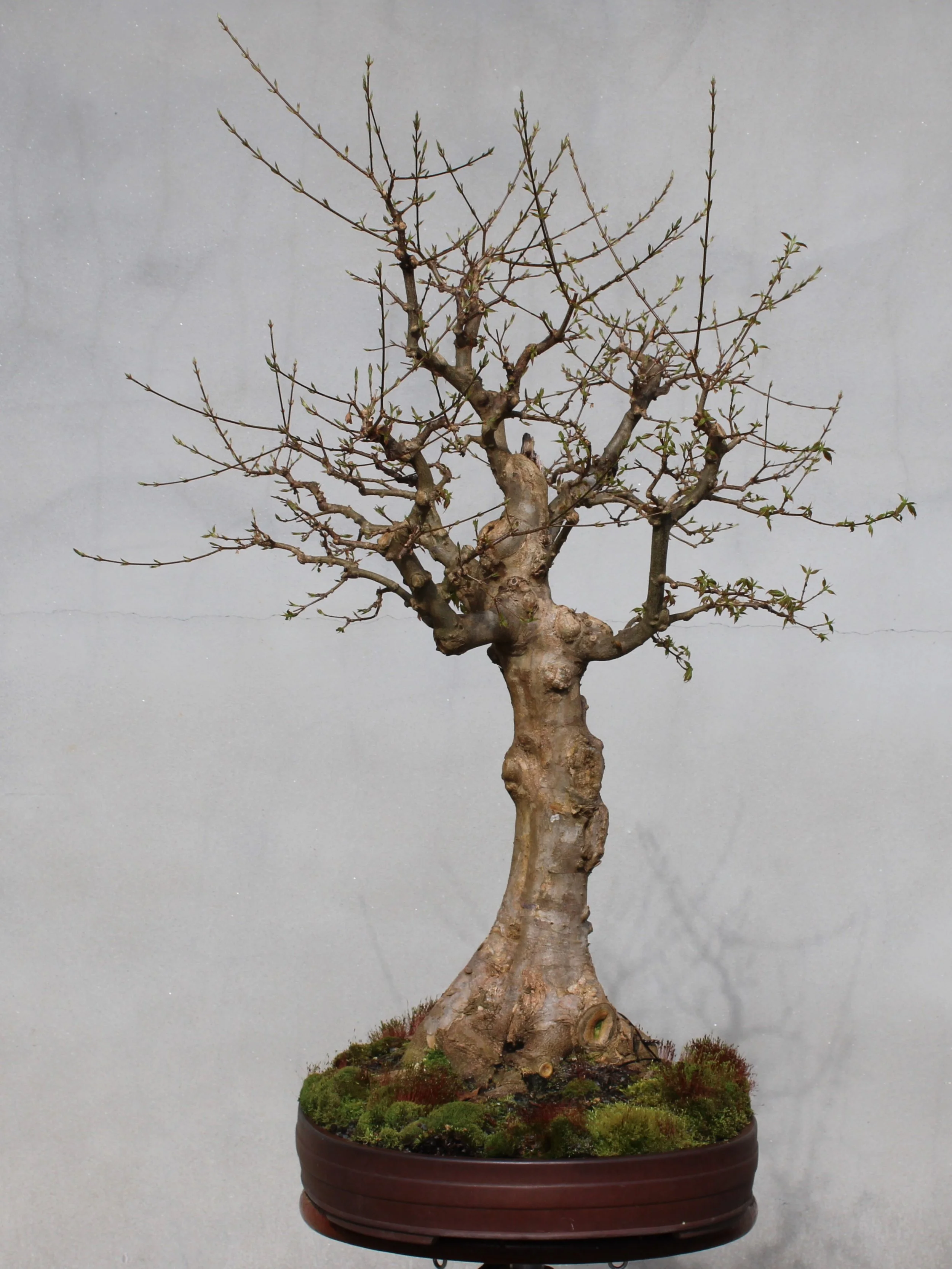
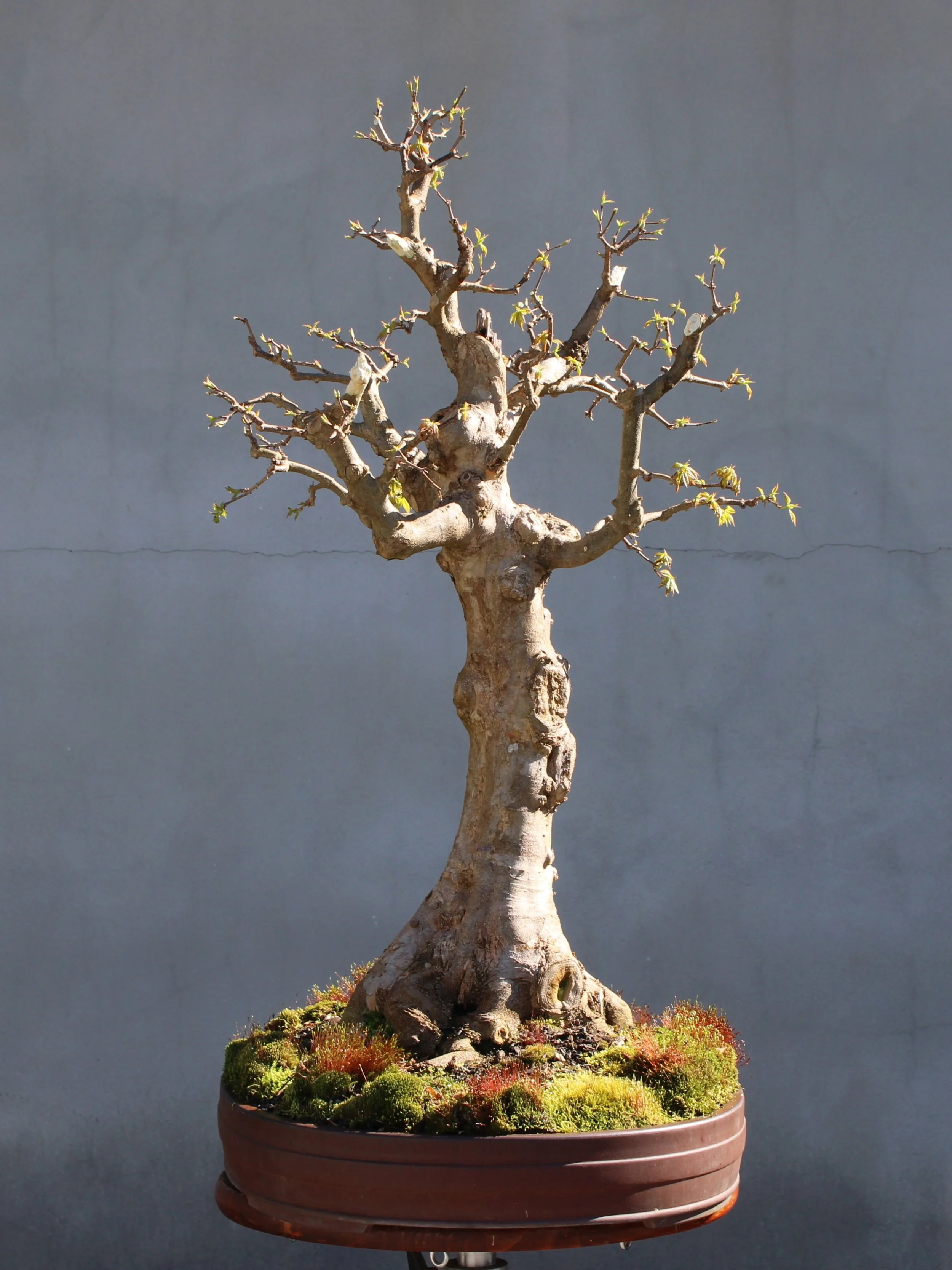
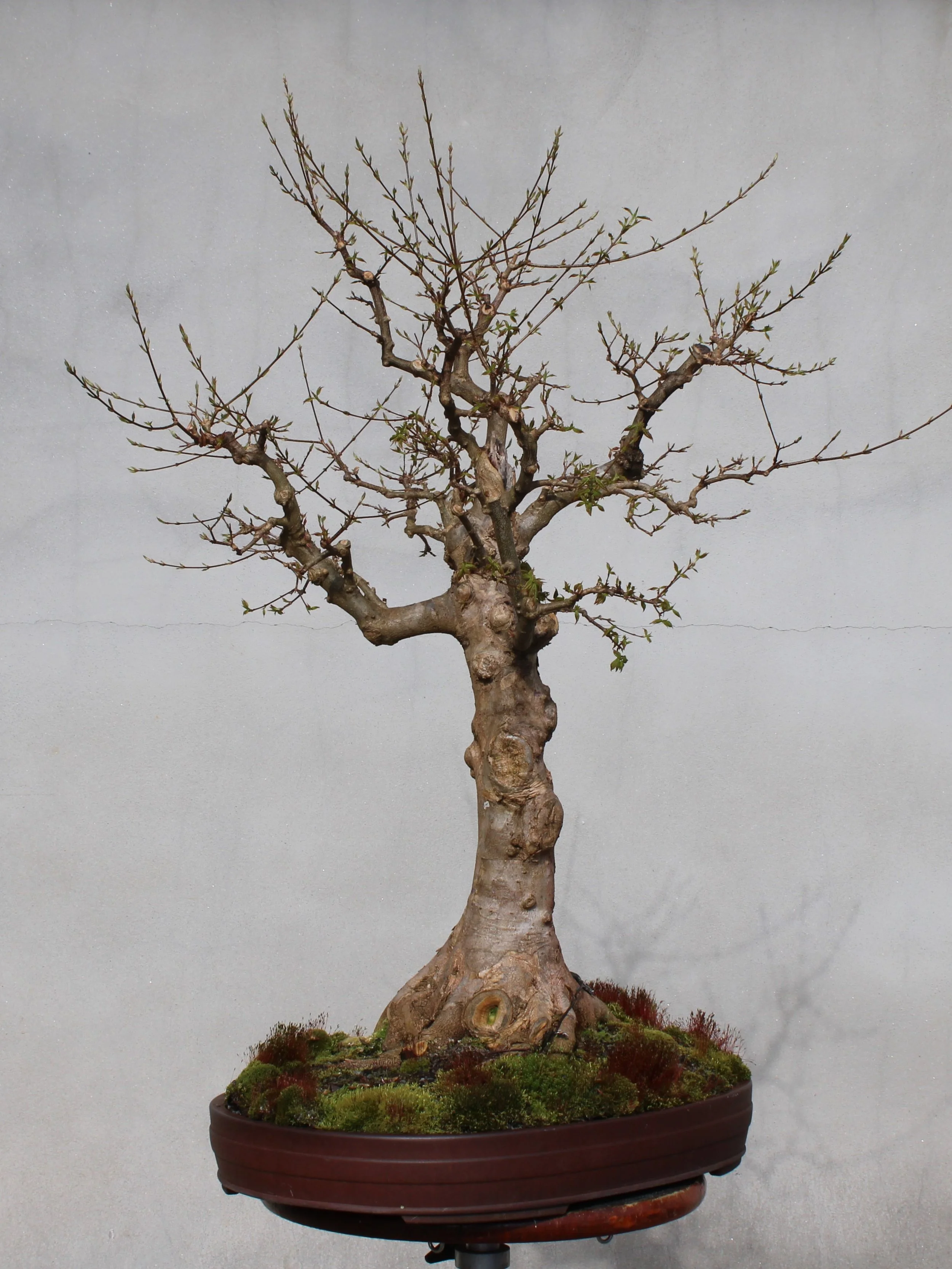
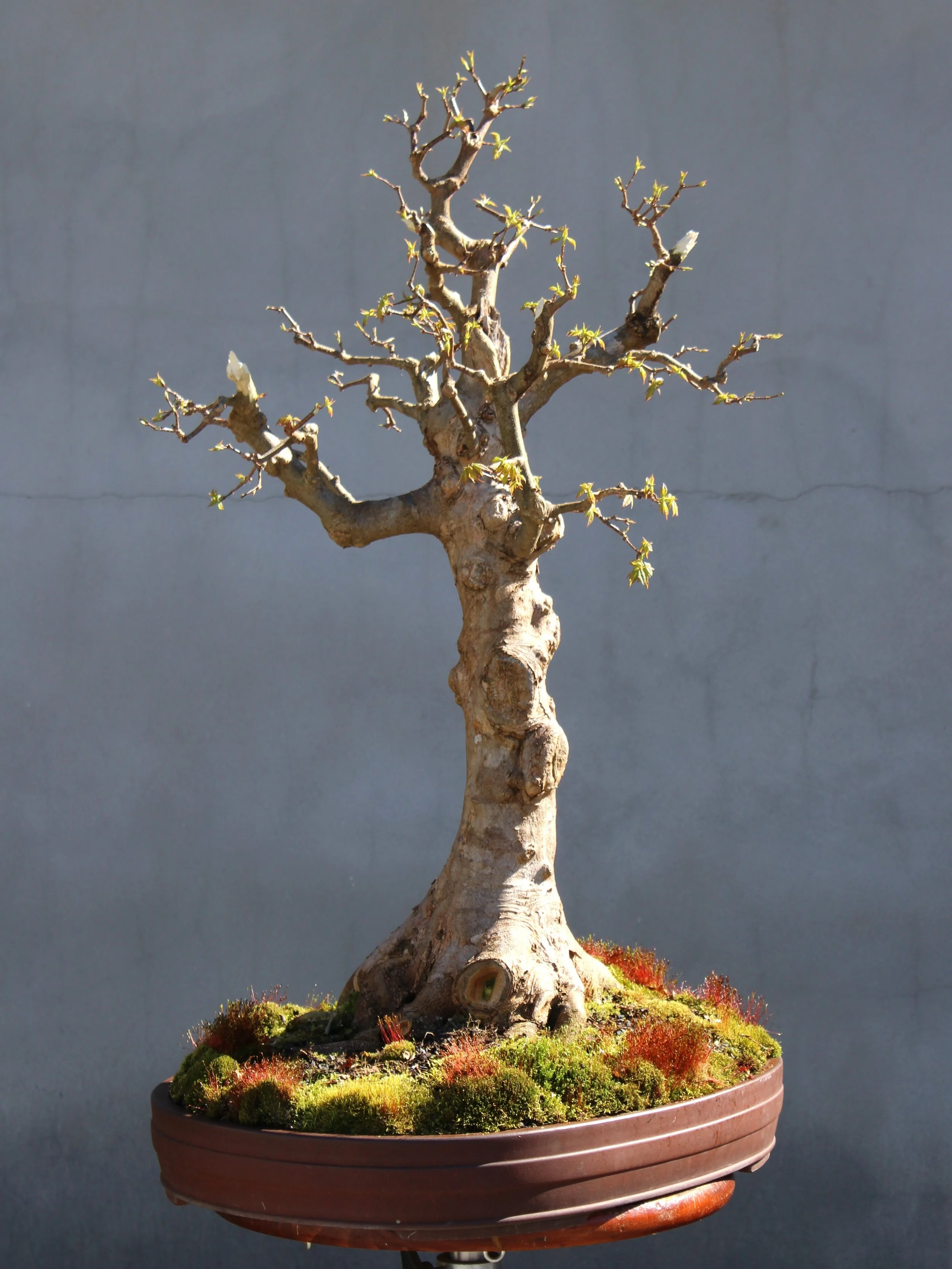
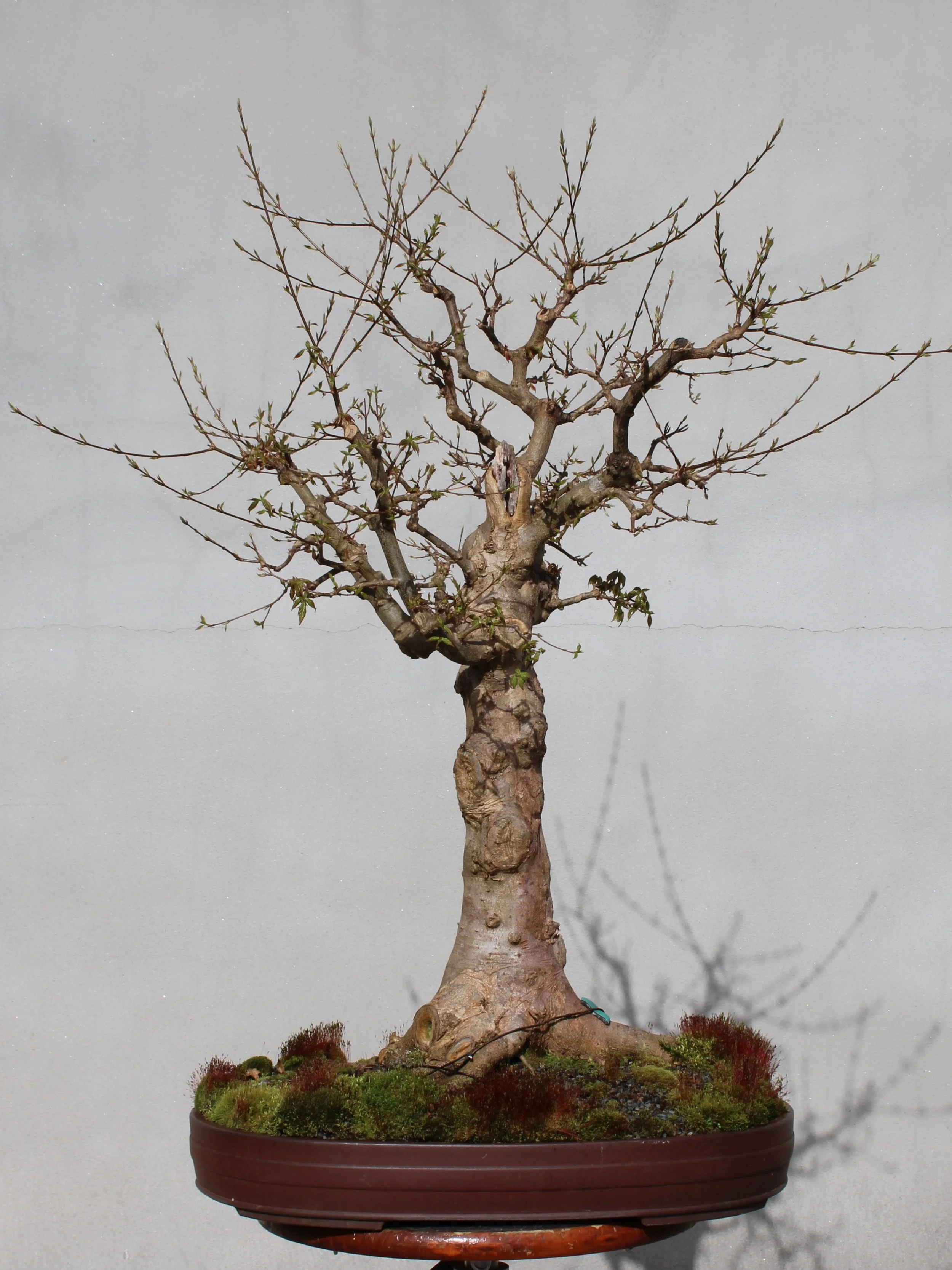
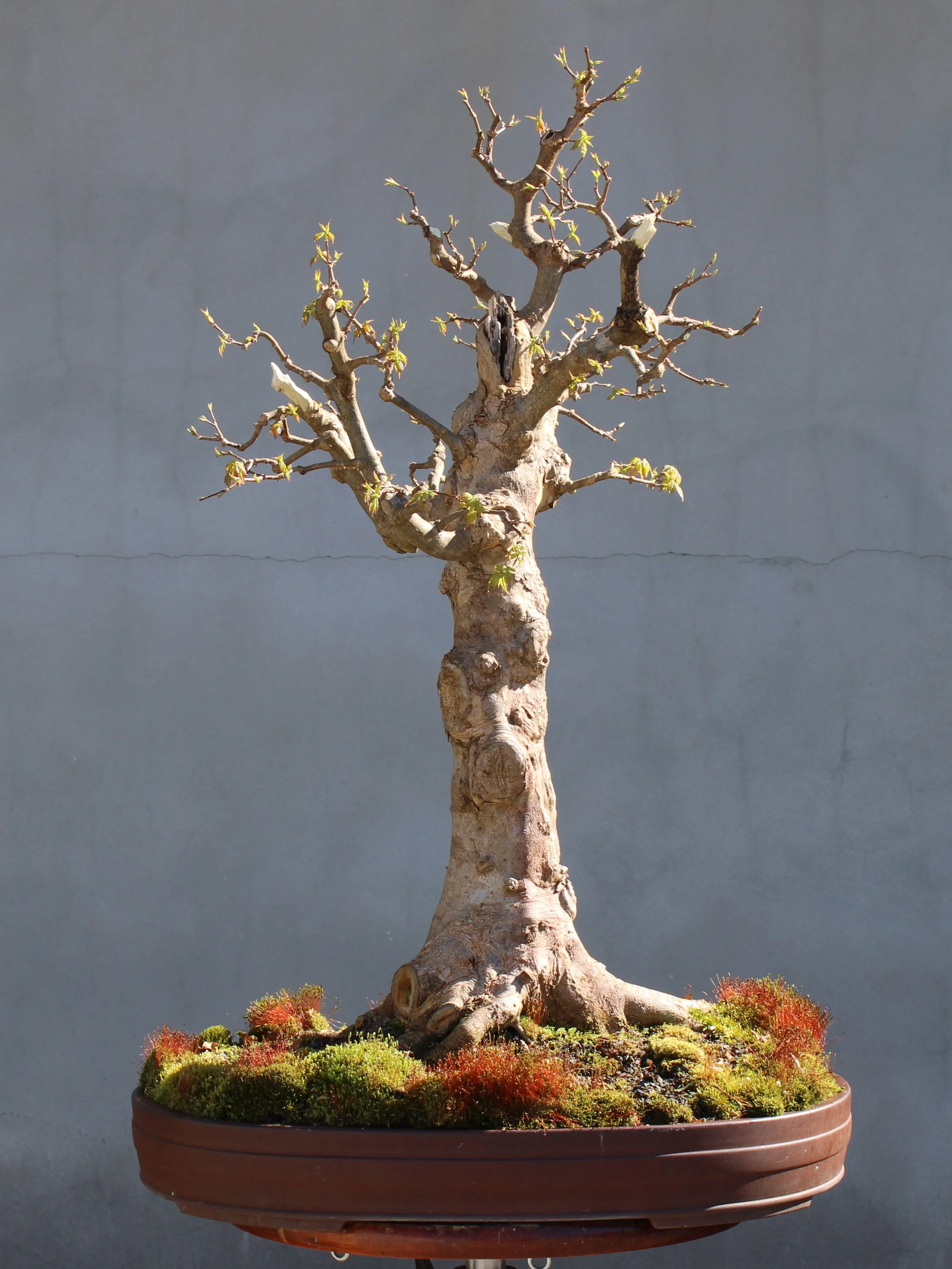
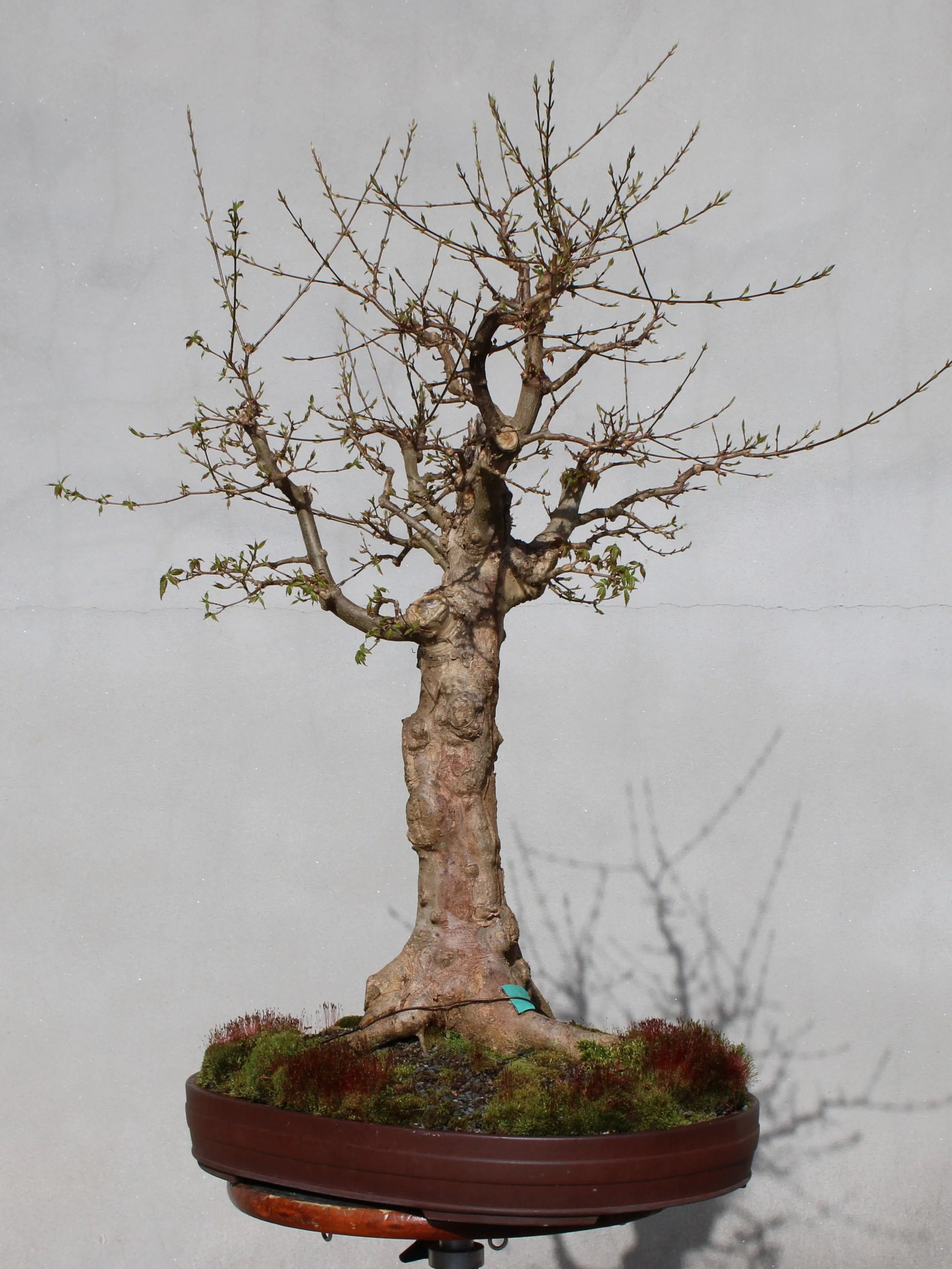
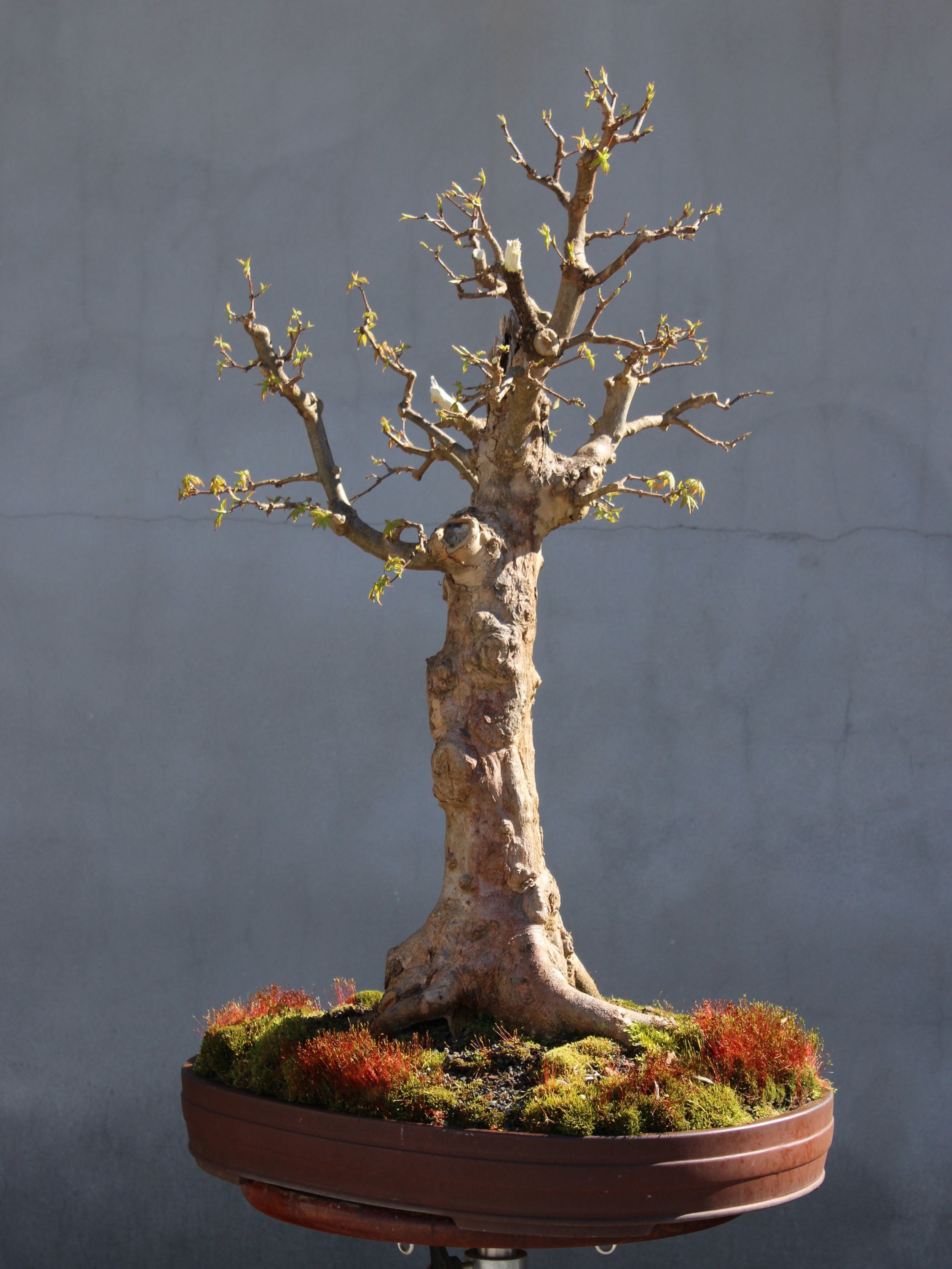
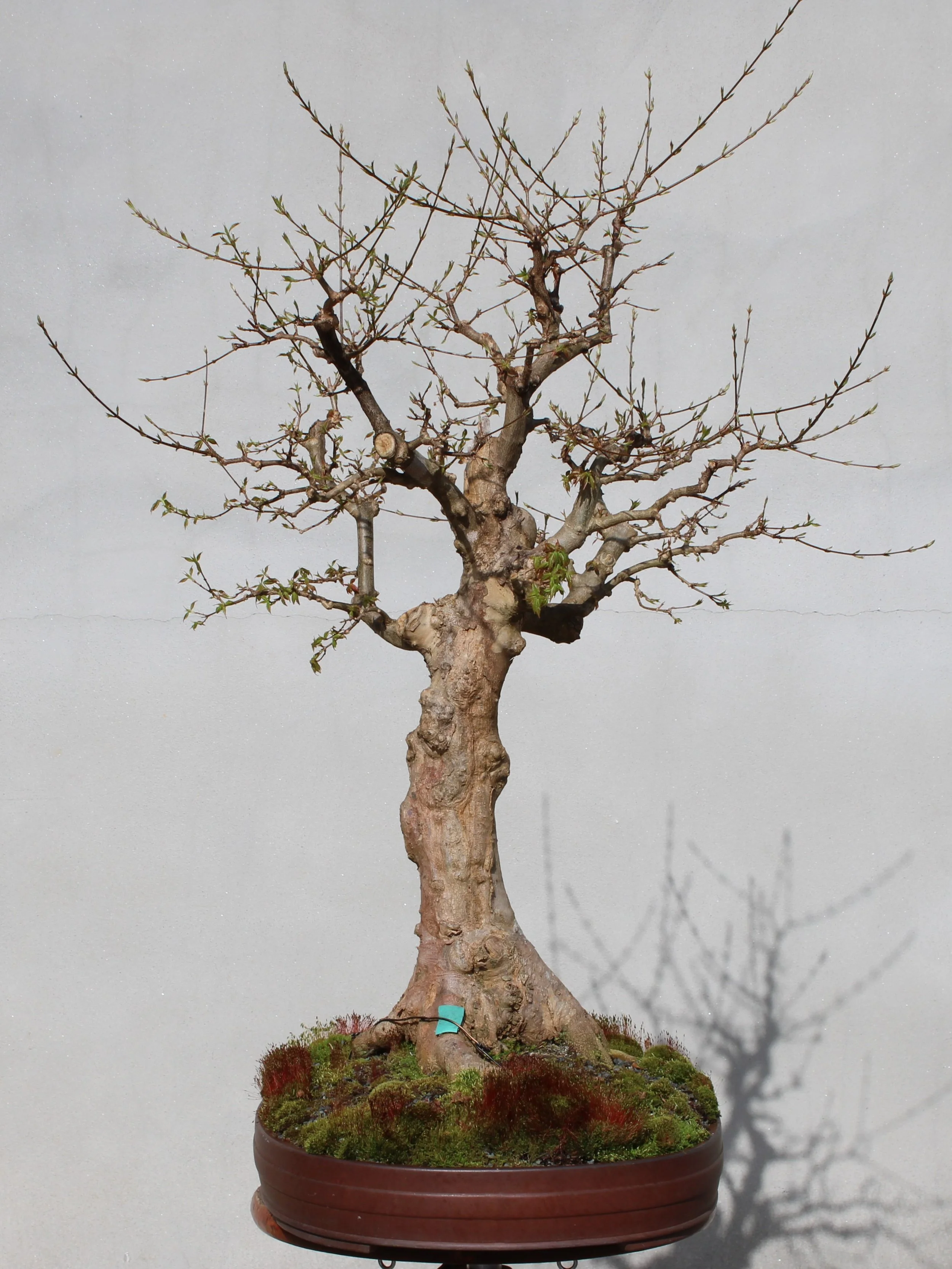
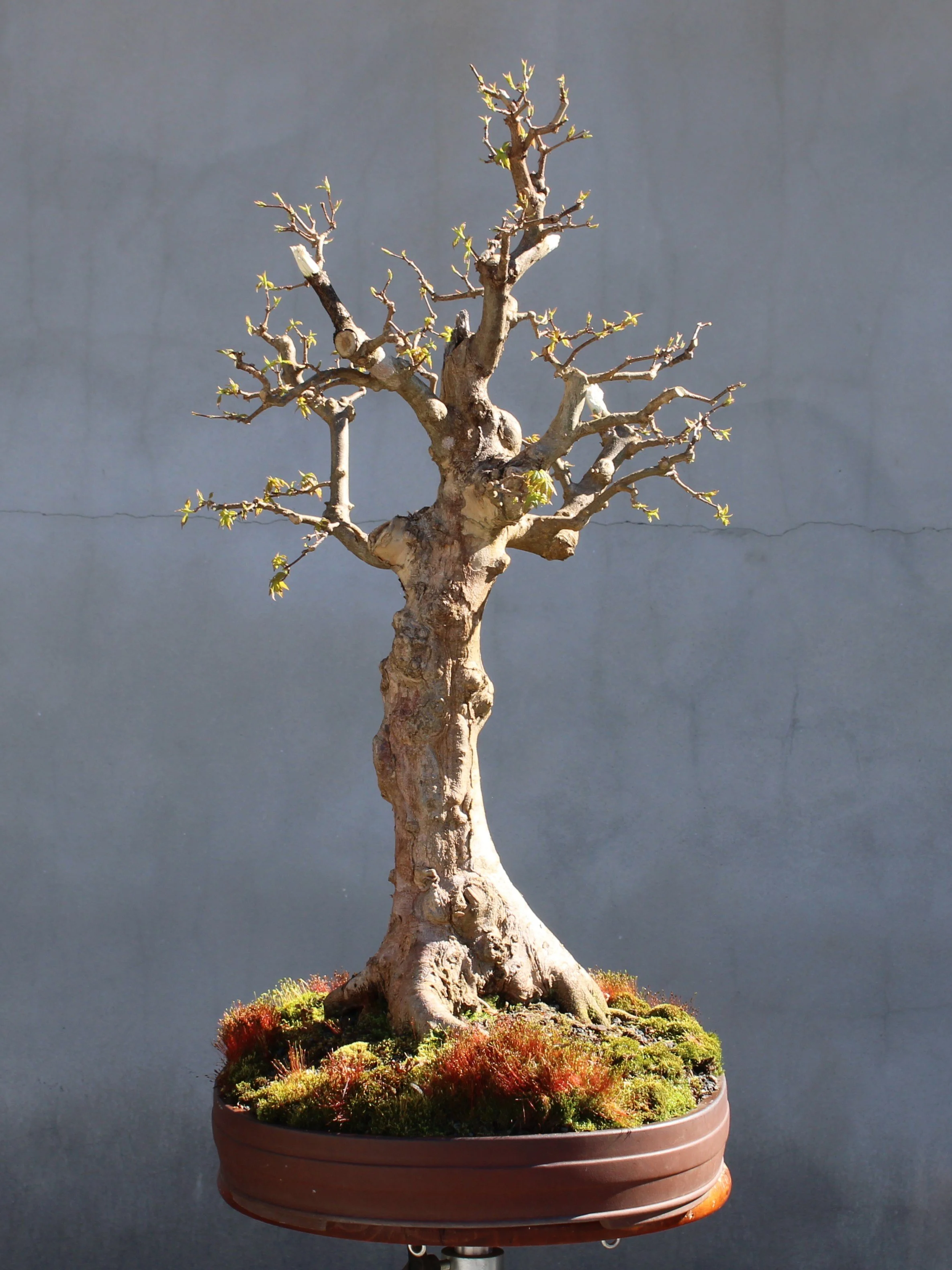
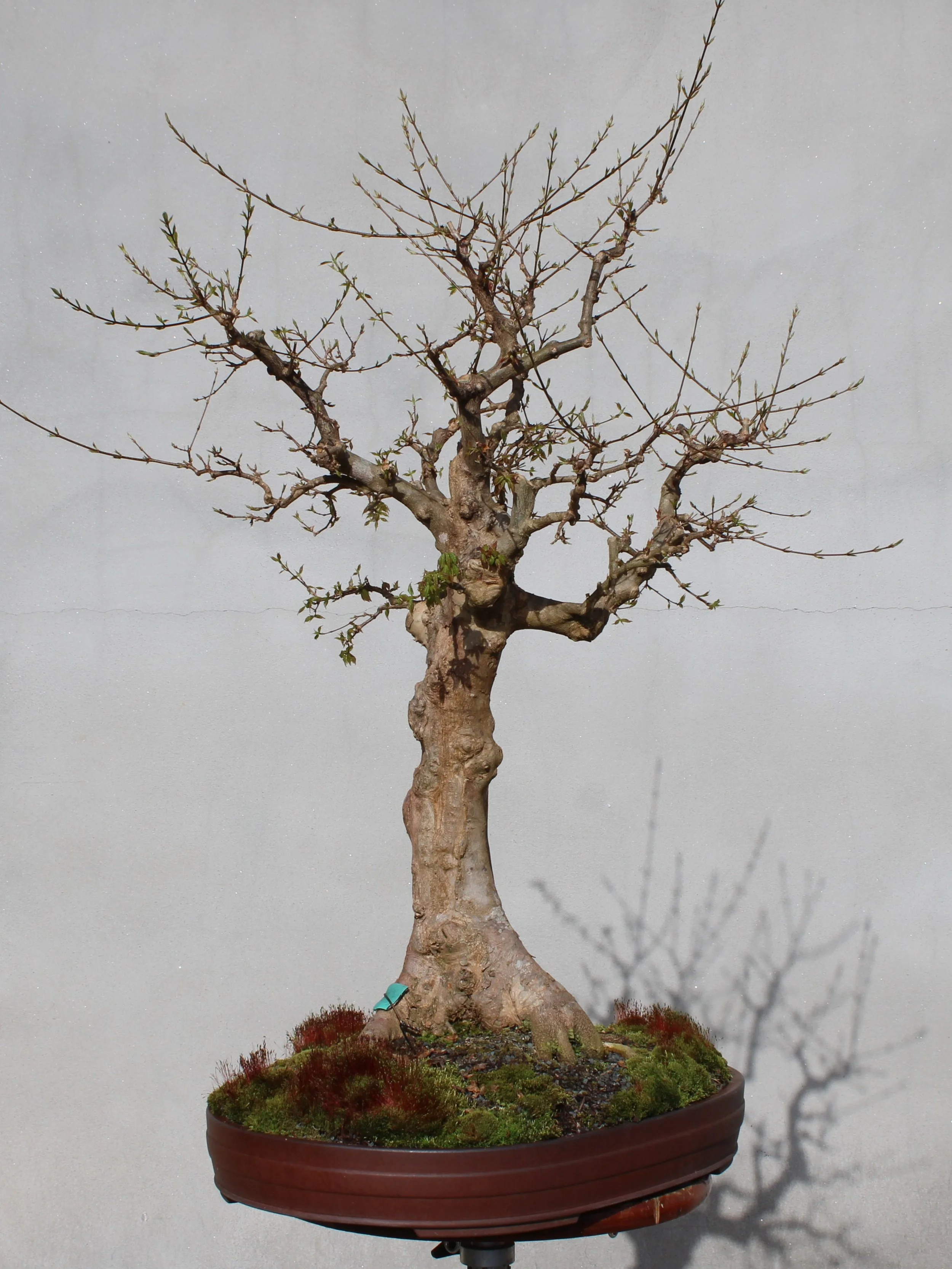
It’s a happening time in bonsai world at the Arboretum! On any given work day there may be four or five trees in the shop, being worked on by the Bonsai Assistant, the volunteers and yours truly. Pre-growth pruning and repotting are the prevalent activities right now, with springtime lurking right outside the door.
Here are a few little trees that were made ready this past week:
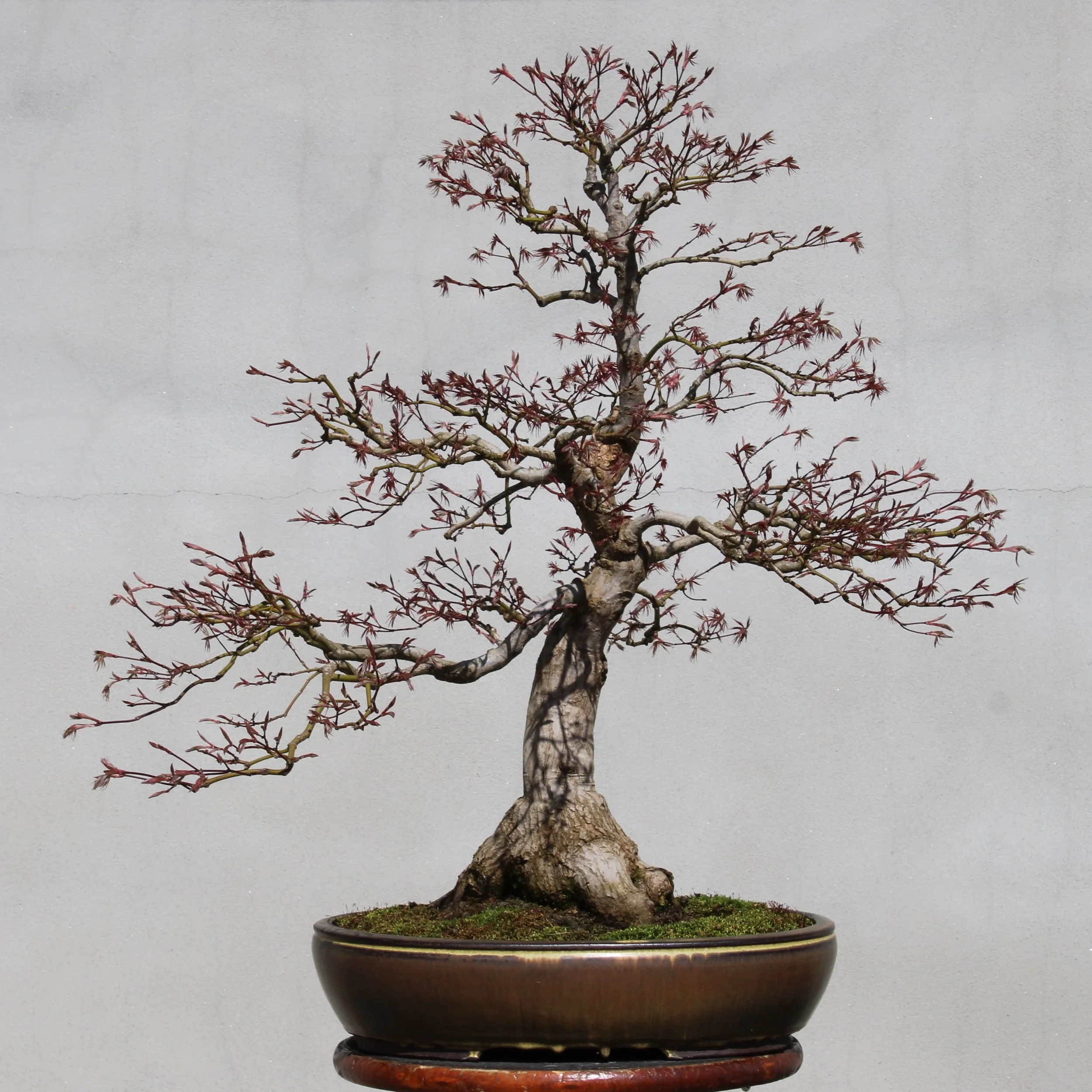
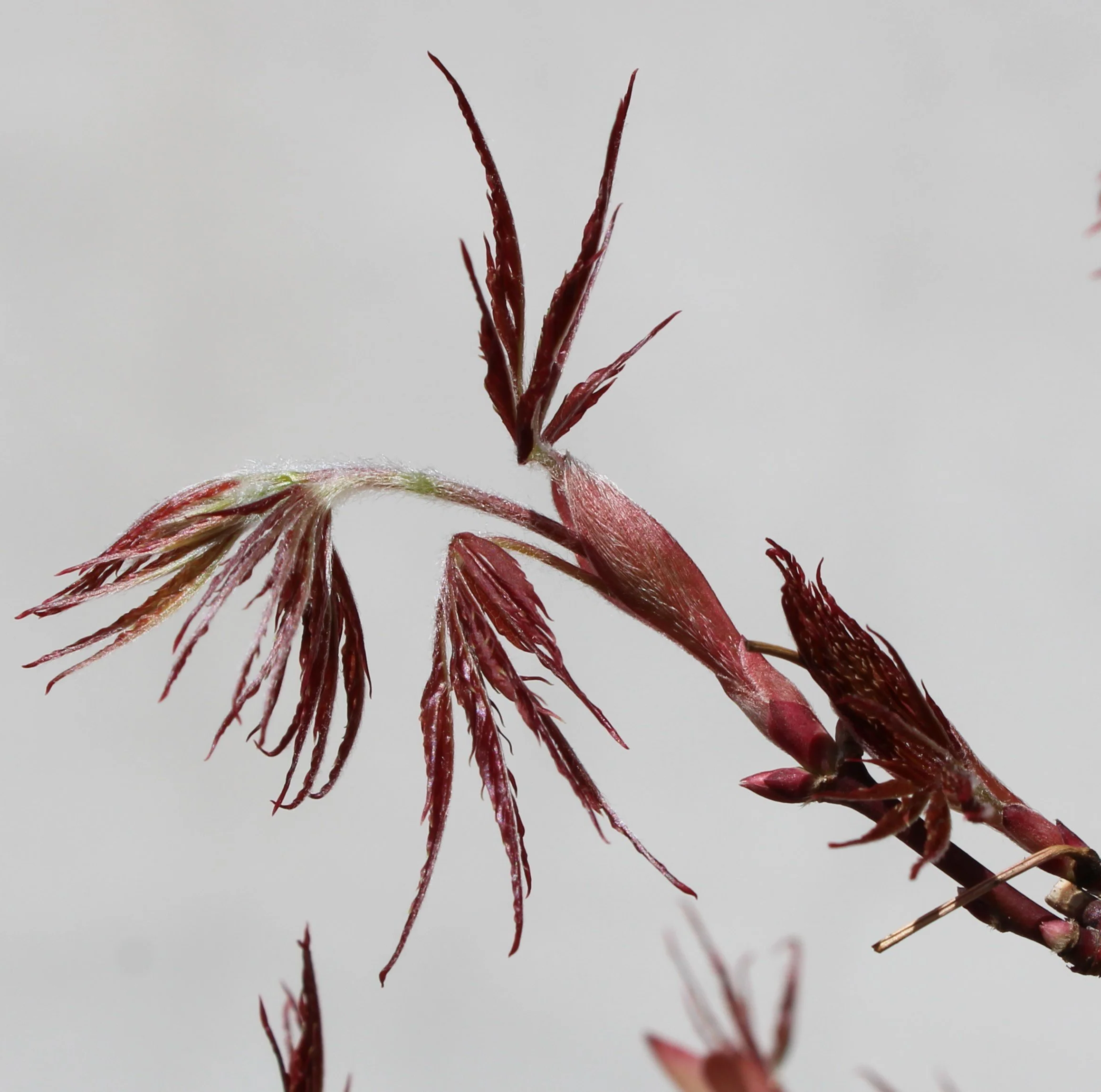
Purple cut-leaf Japanese maple (Acer palmatum v. dissectum 'Atropurpureum' ), previously featured in the Journal
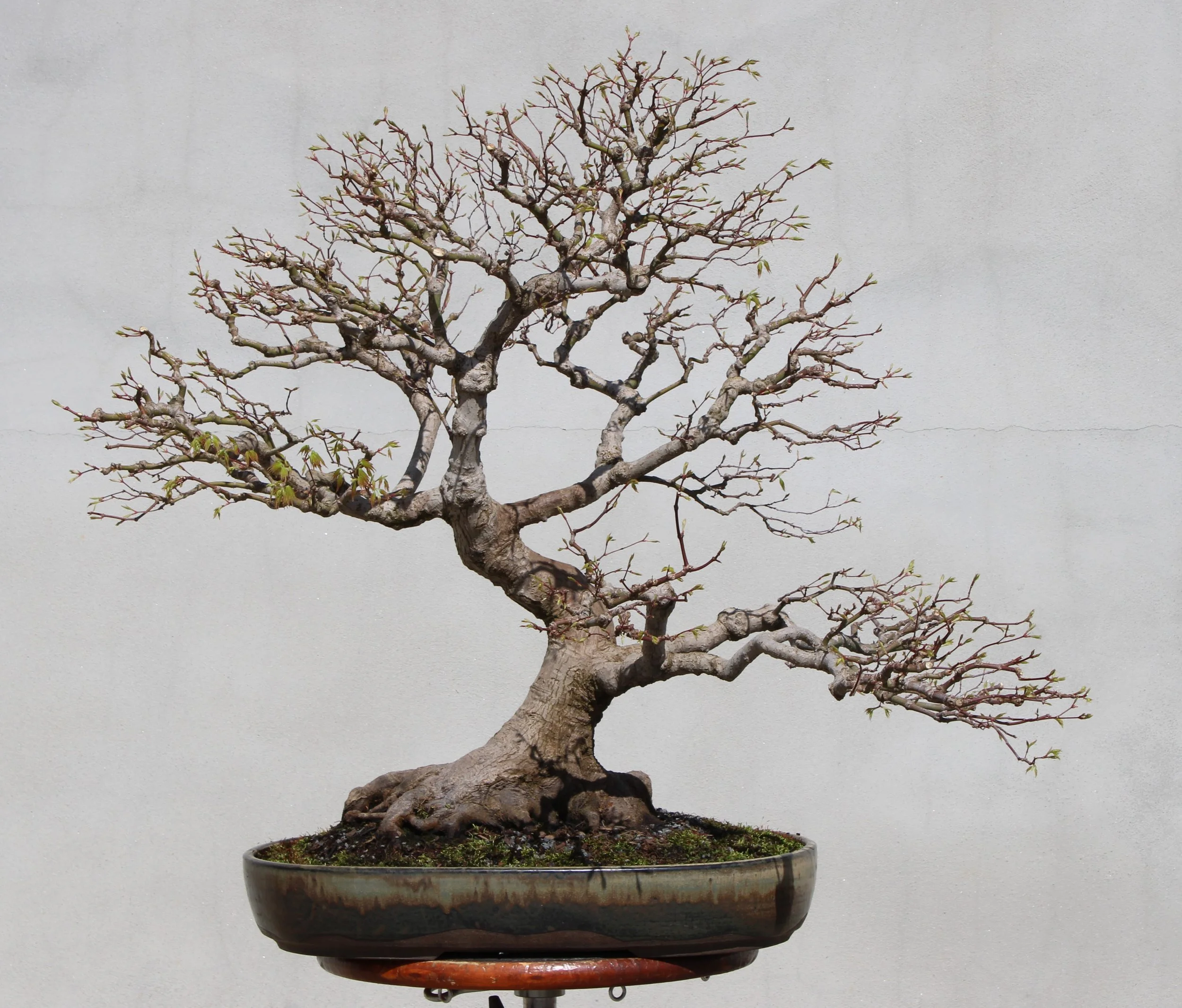
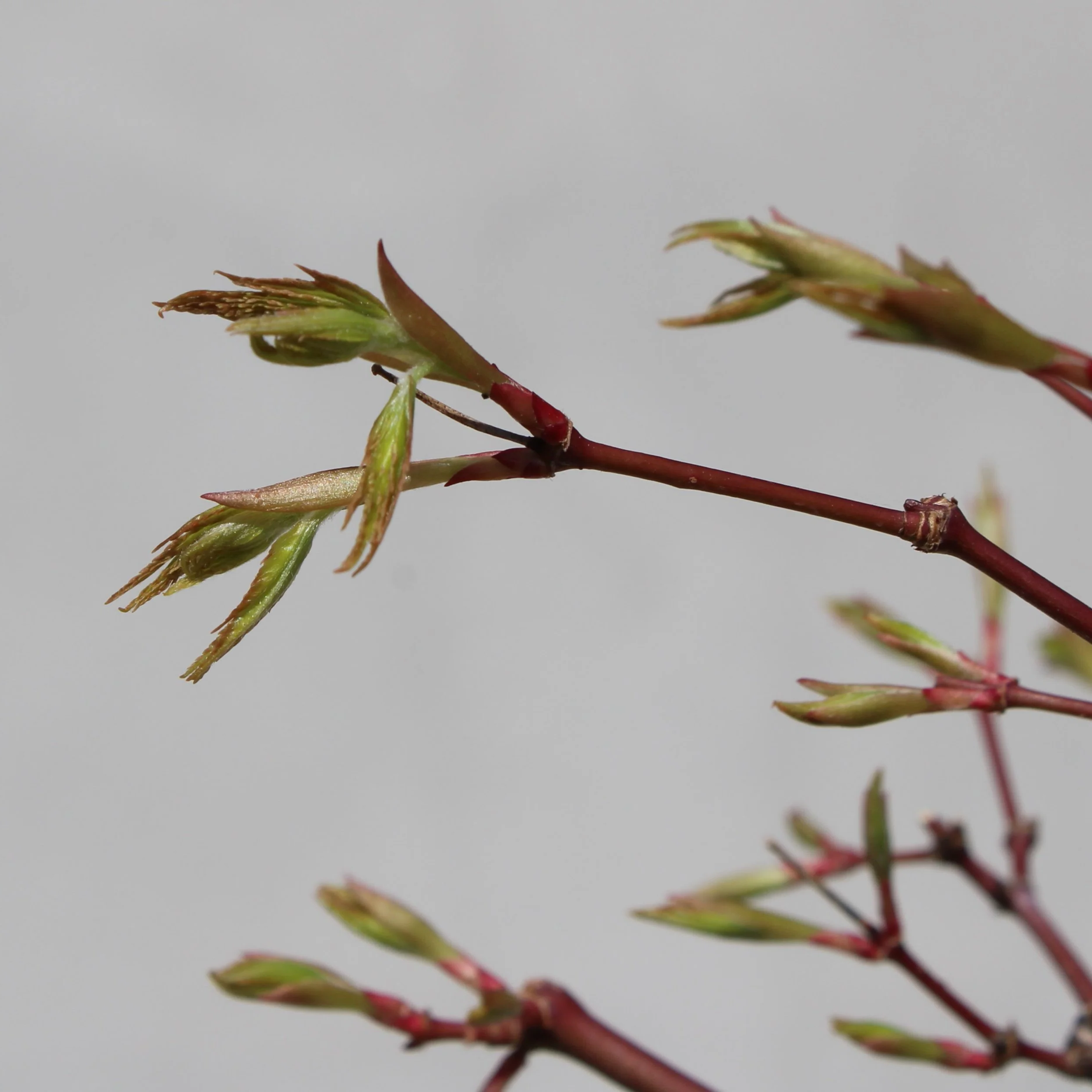
Japanese maple (Acer palmatum), previously featured in the Journal
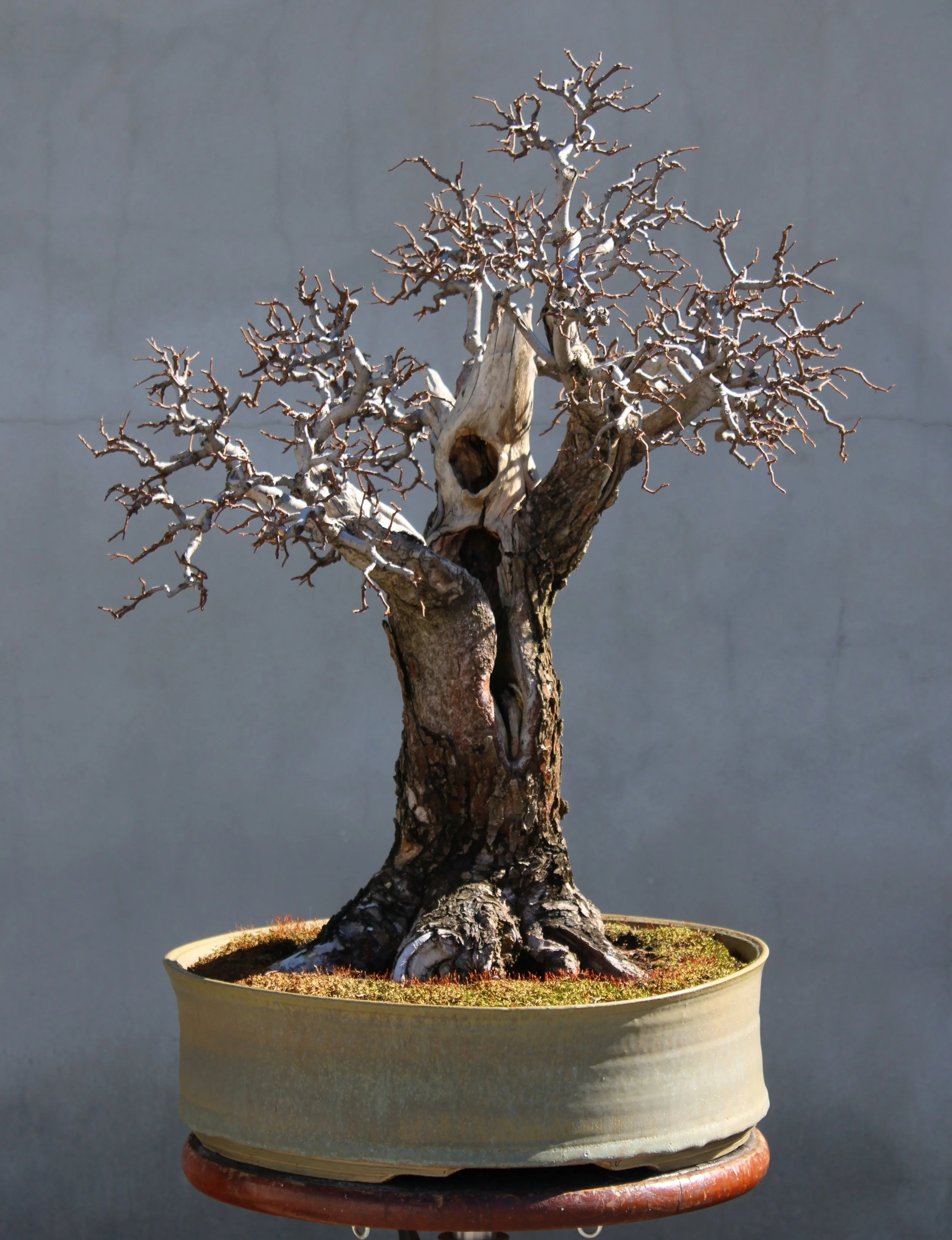
American elm (Ulmus americana), poetic name: ‘El Arbol Murcielago’, previously featured in the Journal
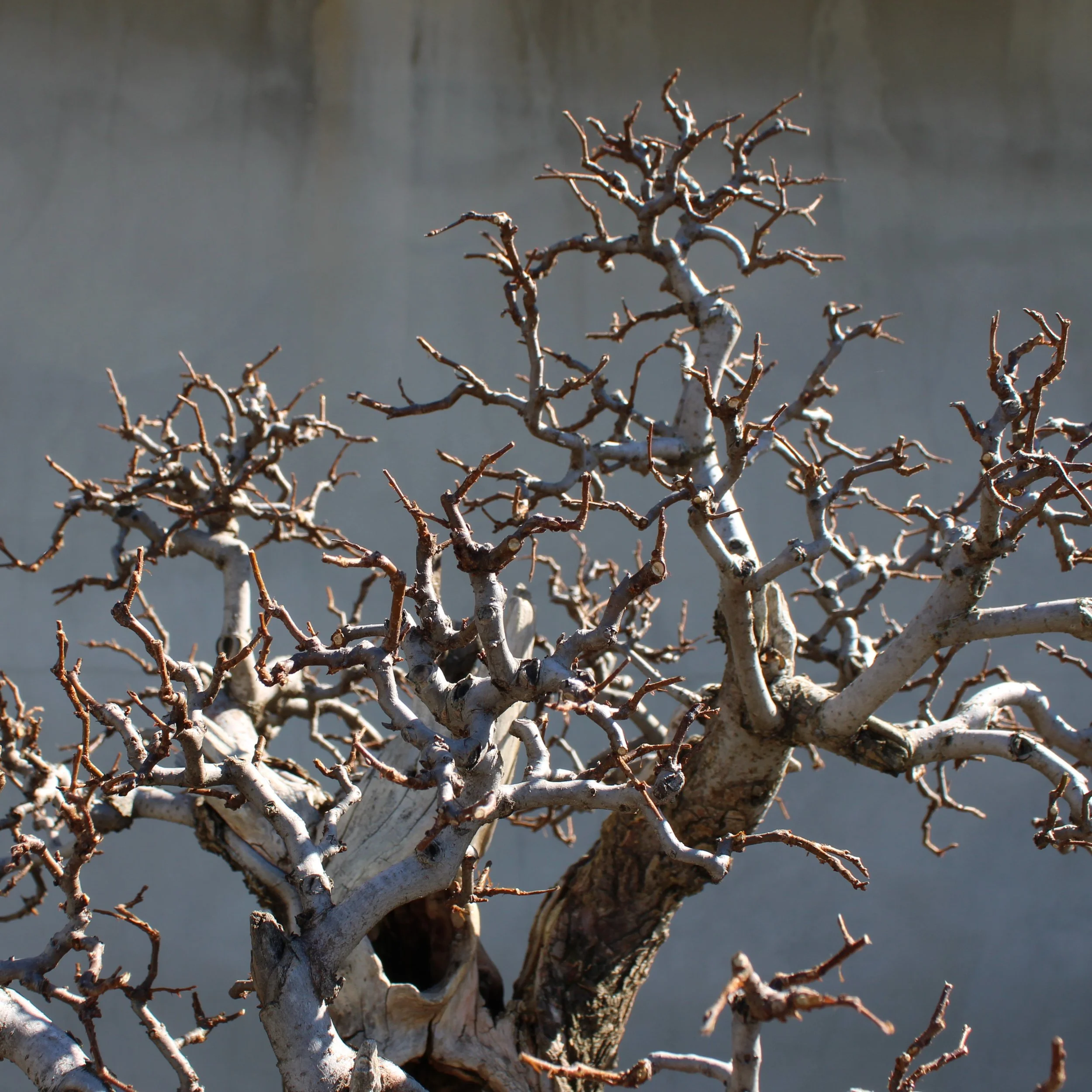
This tree didn’t get worked on this week, but it seemed worth a photo anyway:
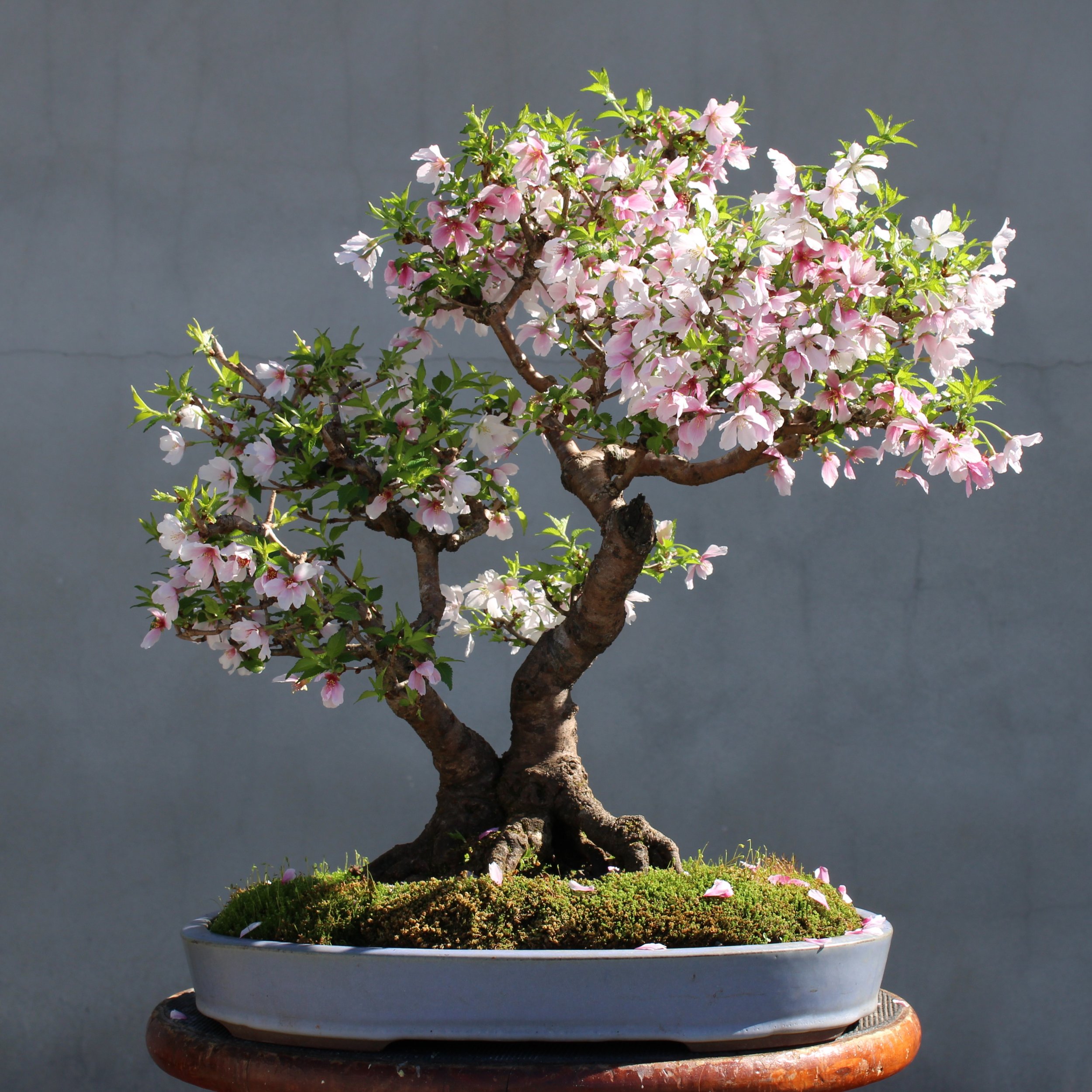
Fuji cherry (Prunus incisa)