Felton - Part 5
During the months between when Felton made his ten thousand dollar offer and when he finally issued his ultimatum, I was kept peripherally informed about the Arboretum's internal deliberations regarding the proposal. I had occasional discussions with the Arboretum personnel involved in the talks, where some indications were given to me about how we were institutionally processing the offer. Other information came from the Johnson's, so I had at least some idea of what was going on. That came to an end when the ultimatum was made. The people on the Arboretum side went silent and no communication was offered as to how the deliberations were going, not to me or to the Johnson's. December's days were dwindling. My hopes grew dimmer as we approached the end of the month and still no word came.
It wasn't until the very deadline — the last day of December, the last day of the year — that I finally learned the Arboretum had accepted the donation and made the required commitment.
There are moments when it's crystal clear that something of profound effect has taken place. Truthfully, this wasn't one of those moments. When humans first walked on the moon, everyone knew an extraordinary milestone had been realized. When a plane flew into the World Trade Center, everyone knew the world had changed forever. There is no comparison being made here regarding the relative importance of those two events and the Arboretum's acceptance of a conditional ten thousand dollar gift. The point is, sometimes you know immediately how significant an event will prove to be and sometimes you don't recognize the full implications until later, when you have the advantage of hindsight.
For Felton and the Johnson's, acceptance of the gift was naturally a moment of great joy and relief. It was for me, as well, but mixed in with those feelings were questions about what this would mean in practical terms and when anything tangible might come of it. Everything I can see so clearly now when looking back was, at the time, nothing but the vague and unknowable future. I had supposed from the beginning that the delay in accepting Felton's offer had to do with the institutional desire to give fullest consideration to all possible ramifications. When the deliberations went on for months, I thought the Arboretum's hesitancy excessive. How much was there to think about? Say yes or say no, but make a decision so we can all move on. As the last few days of December passed and the deadline drew near and still no answer came, I began to feel pessimistic, like maybe an answer wasn’t going to come. No answer would be the same as saying no. Fine, then. We'd move on from no and at least we wouldn't be waiting around wondering where we stood.
If there was anyone who had a clear idea how profoundly the decision to accept Felton's gift might affect The North Carolina Arboretum's future, it was probably the guy at the top — Executive Director George Briggs. George was sharp and had a reputation for being deliberate, and he gave seemingly all Arboretum matters the deepest consideration. He had the chess player's habit of always thinking several moves ahead, carefully contemplating issues and potential issues other people failed to anticipate. George would have seen it. He wasn't clairvoyant, but George likely knew one of the range of possible outcomes in this situation was that bonsai would prosper magnificently and become a defining piece of the Arboretum's identity. That possibility warranted the most cautious concern. Was bonsai the right look for us? Would it ever be possible to present bonsai as anything other than an "ancient Japanese art"? What would happen if bonsai was so successful it distracted from our larger Southern Appalachian-identified institutional mission? The Arboretum was feeling pressure from outside interests to do something to signify our commitment to plant collections and horticulture in general, but was this the right vehicle to answer those demands?
Those were legitimate questions to be contemplated by the person leading a new and still developing institution with world-class aspirations, when faced with making a commitment to this particular enterprise. To give credit where it's due, although acceptance of Felton's donation followed a torturous path to realization, the decision ultimately reached proved correct. George made the right call. What's more, he made it with conviction. A fund was immediately established for the stated purpose of building a permanent bonsai display facility and discussions began about a campaign to attract additional support. Within a month's time of accepting the offer and making the commitment, George chartered a team to begin design work on what would eventually become the Bonsai Exhibition Garden. The Arboretum was about to be fully mobilized to push forward on the bonsai front.
As the year 1999 began, Felton Jones had reason to feel that he had accomplished something important. His dream of bonsai finding a home in the brand new Arboretum of his own home state was on the way to becoming true. As it happened, Felton would not have much to do with the design process that determined what bonsai's home at the Arboretum would look like. I expect that was a disappointment to him. He had designed numerous Japanese gardens, including a public garden in Atlanta, and his experience was worthy of respect. But the Arboretum was not intending to build a Japanese garden. I'm not sure Felton could ever conceive of bonsai being presented without the traditional Japanese essence he so lovingly embraced. Beyond that, Felton was Felton — the gentle, slow moving, soft speaking, sincere old man who belonged to another time and place. The design process was going to be dynamic, intensive, prolonged and ofttimes contentious. I think he would have found it confusing and unpleasant.
In the end, though, I don't think the Bonsai Exhibition Garden would have ever come into being without E. Felton Jones. So much had happened with bonsai at the Arboretum in the years leading up to Felton's donation proposal: the acceptance of the Staples' bonsai collection; my assignment as the collection's caretaker; the study trips to the US National Bonsai and Penjing Museum and then Japan; my time with Mr. Yoshimura; the outreach program to bonsai clubs in North Carolina and beyond; the creation of the Carolina Bonsai Expo. These developments laid the groundwork. A lot of positive energy had been amassed, yet a means for the bonsai program to secure its institutional future was not in evidence. There was no clear path forward.
Then Felton made his move. Like a wise and aged samurai disguised as a humble farmer, in his quiet and unassuming way and at the precise moment of optimal impact he made one simple gesture and precipitated a surprisingly powerful outcome. Picture someone standing atop a mountain and nudging a pebble with their foot, sending that pebble tumbling down the mountainside, dislodging stones and earth and gathering momentum as it goes, exponentially building in strength until that one little pebble causes the whole side of the mountain to move. It took just about all the material wealth Felton had to make the magic happen, but that was a mark of true faith in his actions. It was proof of his sincere belief in the rightness of his cause because parting with that nest egg left him vulnerable and exposed to the crueler realities of the world. Ten thousand dollars was probably just enough to make it happen, too. I don't think a lesser amount would have sufficed. Whatever else he may have done with his life, Felton did this, and it was perfect.
It took just about seven years from the time of Felton’s donation until the Bonsai Exhibition Garden opened to the public. In the wake of his great accomplishment, Felton had to wait, and wait, and wait, fearing all the while that he would not live long enough to see the fruit of his determined efforts. He called the site where the garden was being built “my favorite little hill.”
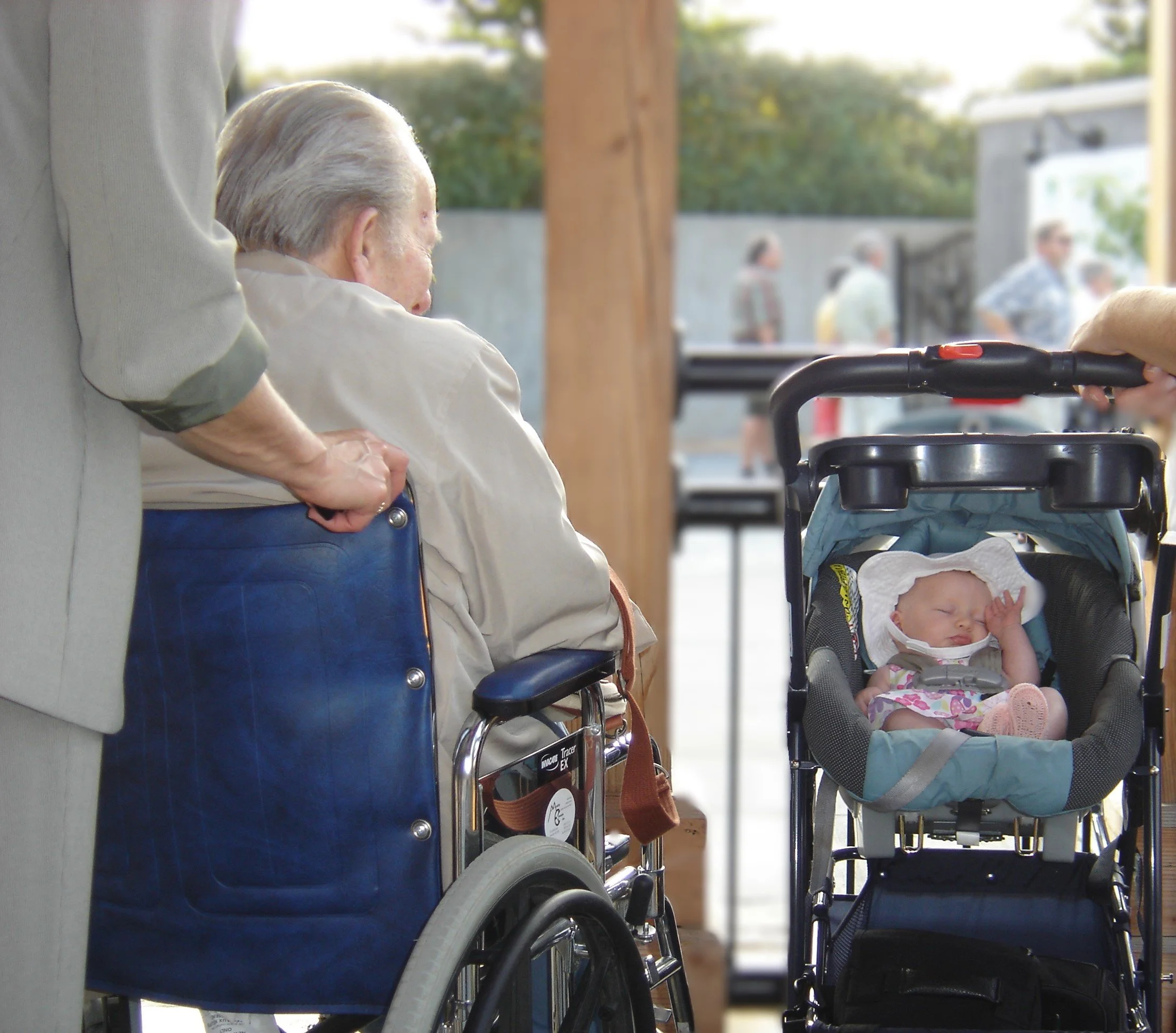
When the garden was finally dedicated in October of 2005, Felton was there. He was in a wheelchair by then, much diminished, only two years from taking his last breath, but he was there and he approved of what we built. Felton Jones lived long enough to see his dream become reality.