Designing the Bonsai Garden - Part 1
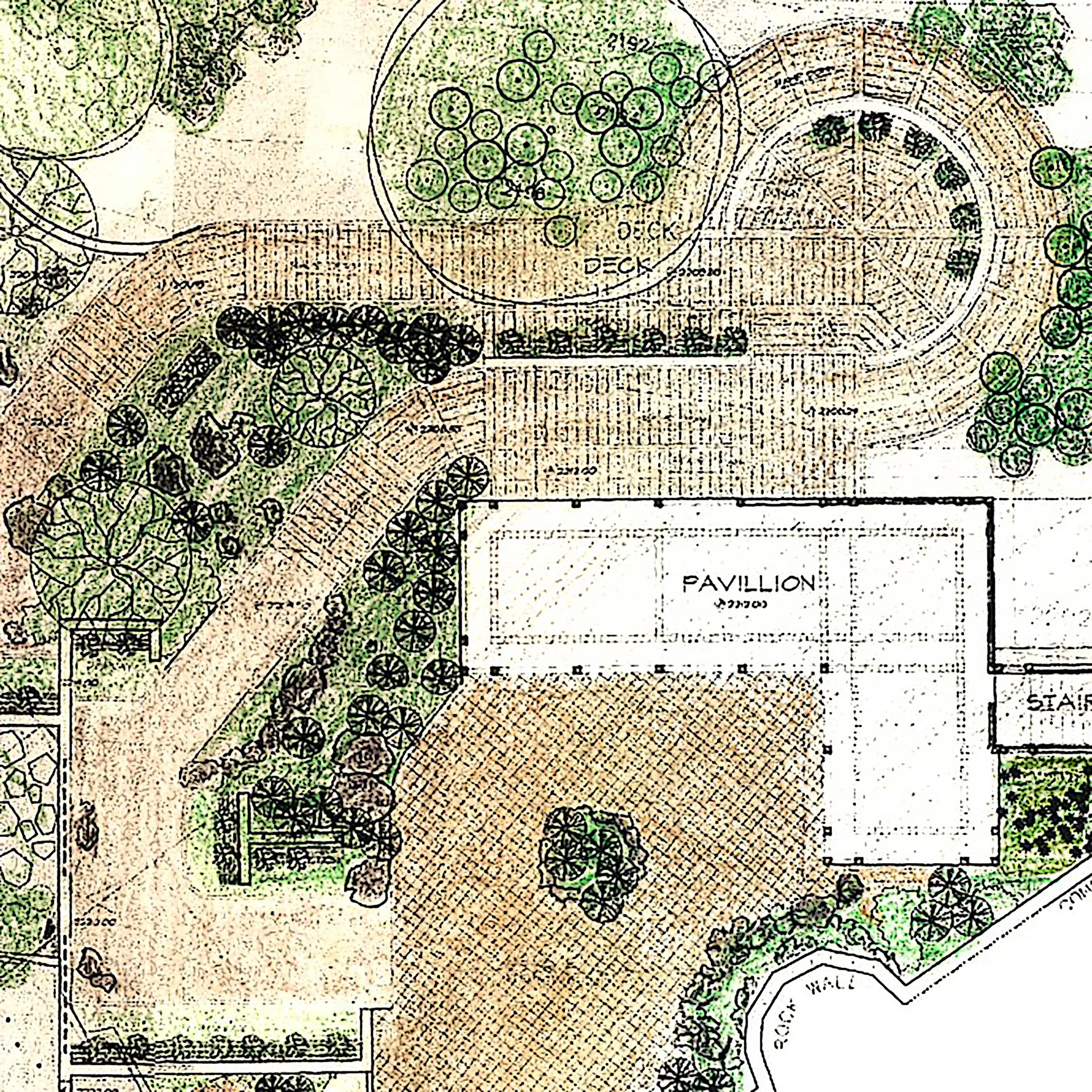
The acceptance of Felton Jones’ financial gift on the very last day of 1998 set up a roller coaster ride that would continue for the next seven years, beginning almost immediately. In that span of time, after making a commitment to the art of bonsai by agreeing to build a bonsai facility, The North Carolina Arboretum would follow up by conducting an exhaustive design process to determine what that facility would be, then raised $1.8 million in privately donated funds for construction, before finally building the Bonsai Exhibition Garden and opening it to the public in October of 2005.
Once an entity is brought into being and subsequently sticks around and prospers for twenty years, it’s easy to take its existence for granted. I have previously written about the importance of the garden as the physical embodiment of the Arboretum’s bonsai philosophy. However, the people who have come by the millions over the past twenty years to discover and enjoy for themselves the bonsai garden and its quiet delights mostly didn’t think about it that way. They visited the Arboretum, came across the bonsai garden, walked through it and were engaged by what they found. Those people didn’t know how bonsai came to be here and all that went into the garden’s creation, and they wouldn’t necessarily care about any that. The garden was there for them when they visited and became part of their Arboretum experience, part of what they thereafter conceived the Arboretum to be. Only a negligible number of those people walked out of the garden thinking, that’s not very good; wonder why they have such a thing?
The reason our visitors have reacted so positively to our bonsai presentation has much to do with the magical appeal inherent in bonsai itself. But if that was all there was to it, every public garden would have a bonsai collection on display and they would all be wonderfully successful. Instead, only a minority of public gardens in the United States feature bonsai, while numerous others have considered it and decided not to. Some public gardens that do have bonsai treat it as an exotic sideshow, with no expectation that little trees should be much else. There have also been several public gardens that attempted to introduce a bonsai element to their offerings and failed in the effort.
This is the story I’ve been telling you: The bonsai meme found its way to The North Carolina Arboretum and then cultivated a champion there to devote energy and intellect to the business of its promotion. Bonsai’s champion at the Arboretum turned out to be me. Although I had no previous reason to know or care about little trees, circumstances were such that bonsai presented itself as a vehicle for accomplishing several very important personal goals. For that reason, I threw myself entirely into the mission of seeing bonsai succeed. The institution was not predisposed toward little trees and was leery of investing much in them. I pushed and pushed the bonsai agenda, networked and gathered together other people to help me push, and eventually a critical mass of pressure was brought to bear. After stiff resistance, the Arboretum finally relented and agreed to open the door.
I had spent considerable effort in constructing an alternative bonsai concept for the purpose of prying that door open. I had been told that bonsai would never be part of the Arboretum if the art had to be identified as belonging to a foreign culture, so I concentrated on framing it differently. At the moment when Arboretum administration relinquished its resistance and said yes, I found myself in the position of the dog who one glorious day catches the car — okay, now what?
Actually, it didn’t take long to adjust to the new reality. My motivation had everything to do with personal need, but there was nothing insincere about my embrace of bonsai. I had the courage of my convictions. Good thing, too, because the road ahead was going to be fraught with conflict and frustration.
The design process for the Arboretum’s bonsai garden began in February of 1999. At that particular time, the Arboretum had just initiated a new system for conducting developmental projects. We committed institutionally to the idea of “empowered teams”. Design of the bonsai facility happened to be one of two initial projects handled this way, which required following certain prescribed steps toward realizing an objective. As a first step, Executive Director George Briggs drew up a charter, and a team was assembled to work on the project. I was given the assignment of writing a concept statement, and after three drafts and three rounds of review and advice, this is what I produced:
BONSAI DISPLAY GARDEN DESIGN PROCESS: CONCEPT STATEMENT
The North Carolina Arboretum (TNCA) seeks to build a display garden for its bonsai collection. The objective is to create a unique and innovative environment, which allows easily accessible viewing of the bonsai while meeting all applicable building codes and regulations. The character of this garden is to be rooted in the Southern Appalachian experience, presenting bonsai as a horticultural art form that interprets and celebrates the natural world around us. The ultimate goal of the garden must be to facilitate an experience of wonder, through the stimulation of the visitor’s senses and intellect.
TNCA will employ a team-oriented approach to the design process. Team members will be selected at the discretion of the Executive Director, the Director of Horticulture, and the Bonsai Curator to provide a variety of talents, experiences and perspectives. The ideas and abilities of team members are to be pooled in order to produce a sound, well-rounded, imaginative and yet practical final design for the garden’s construction. The views of all team members will be thoughtfully and respectfully considered. Perspective and support from advisors outside of the team will be solicited as needed. Decision-making by consensus is highly desirable and will always be a goal, but is not mandatory. Authority for final decisions rests in the hands of TNCA, as represented by the Executive Director, with close counsel from the Director of Horticulture and the Bonsai Curator.
The bonsai display garden design team will include, but not be limited to, the following:
· Sponsor, TNCA Executive Director George Briggs – has the authority to provide for team needs in terms of resources, guidance and encouragement
· Facilitator, TNCA Director of General Services Ron Gordon – a technical advisor; helps to resolve internal organizational and procedural difficulties in reference to team functions
· Leader, TNCA Bonsai Curator Arthur Joura – chairperson; presides over the process, coordinates schedules, builds consensus, represents the team to those outside of the process
· Lead Architect, Bill Dechant of Moody and Associates, PPLC – has primary responsibility for the preparation of a design that meets the program requirements of the owner (TNCA); oversees the work of the Landscape Architect in terms of design integrity, compliance with state and other relevant building codes and regulations, and adherence to the owners program requirements
· Landscape Architect, Fred Blackley, ASLA – principal landscape architectural consultant to the Lead Architect ; oversees the work of the Garden Design Expert
· Garden Design Expert, Mike Oshita, Master Japanese Gardener – is responsible to the Landscape Architect, and ultimately to the Lead Architect, for design and/or construction services with respect to certain specialized landscape applications as prescribed by the owner, Lead Architect, and Landscape Architect
· Plant Specialists, TNCA Director of Horticulture Alison Arnold and TNCA Board Member Dr. Peter Gentling – provide technical support and advanced knowledge in the area of horticulture
· Design Specialists, TNCA Landscape Designer Clara Curtis and Mike Bircher, ASLA – provide technical support and advanced knowledge in the area of landscape design
The bonsai display garden design team will convene on a monthly or more frequent basis, until completion of the design is realized. All design meetings will be conducted at TNCA, unless otherwise determined. Design documents are to be completed no later than October 1, 2001, and presented for public inspection at the 2001 Carolina Bonsai Expo.
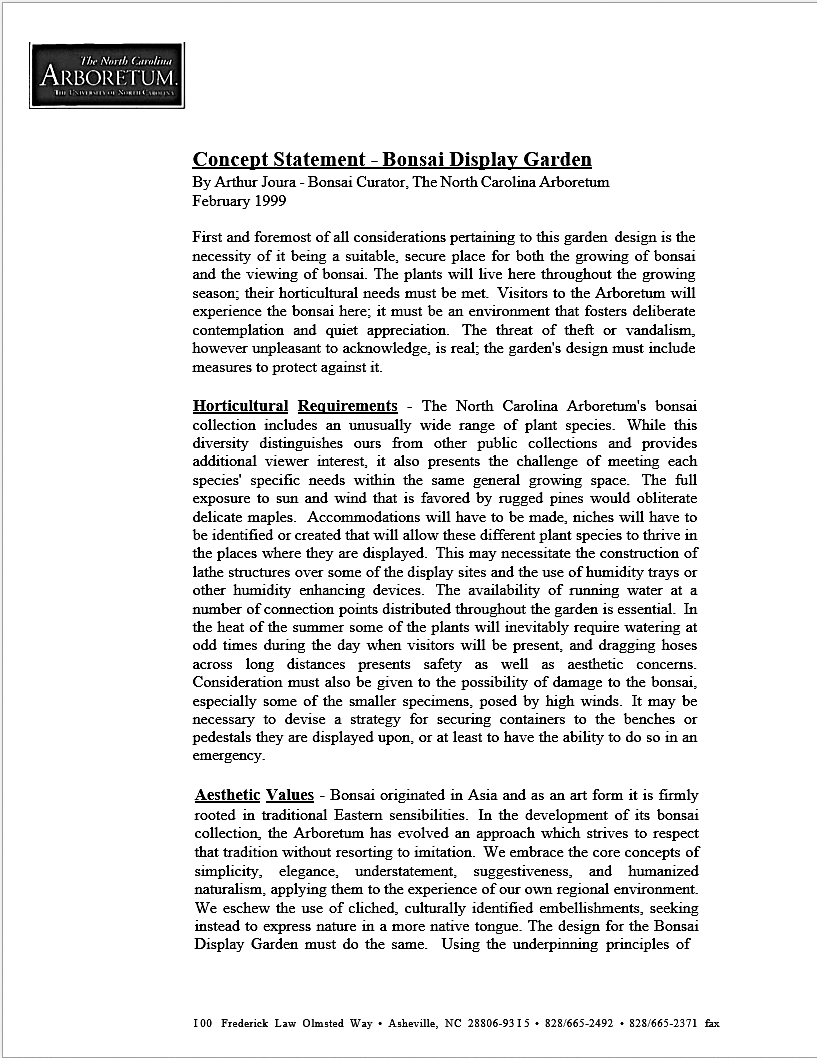
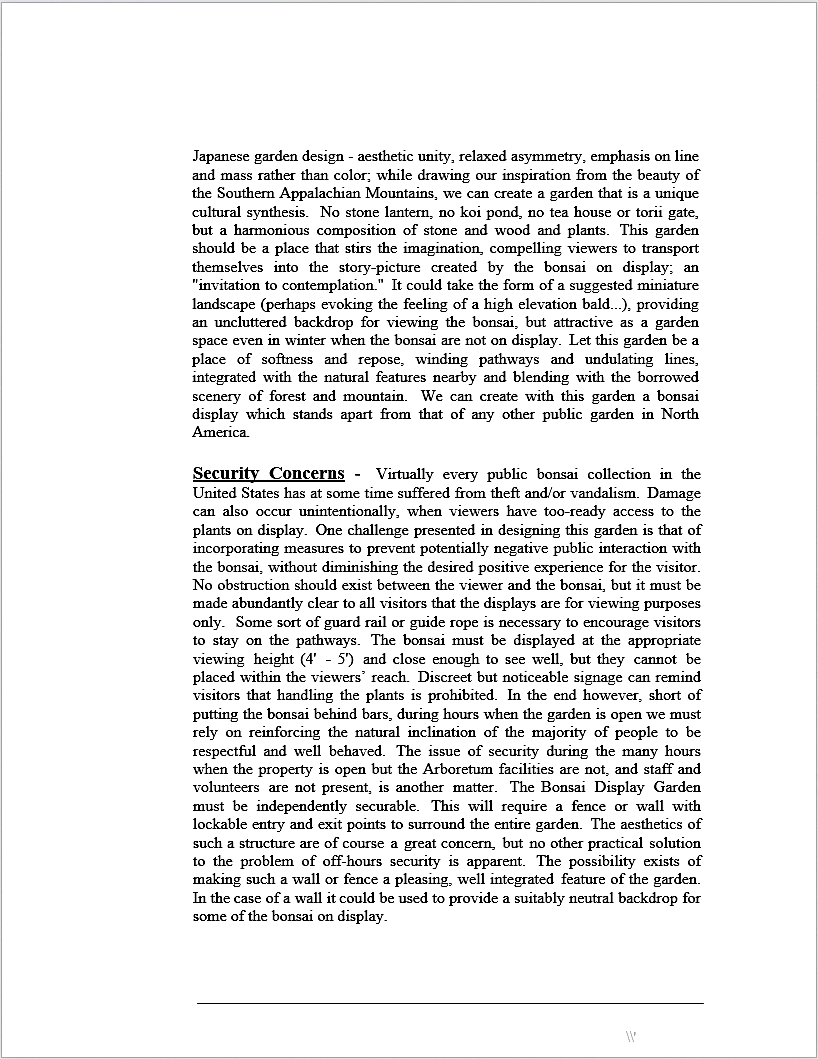
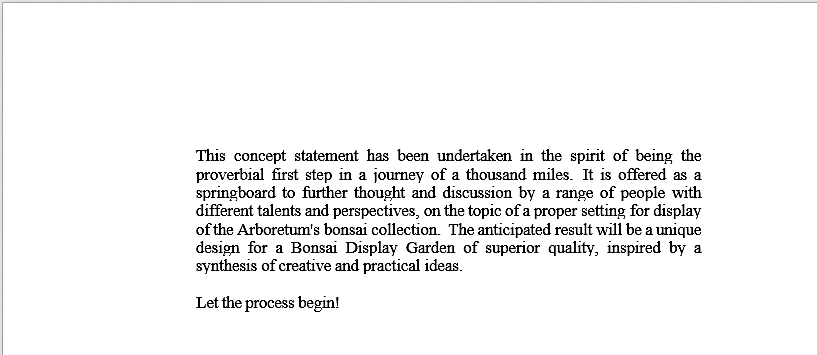
After this in-house concept statement was written, I was asked to write another that was intended specifically for members of the design team. This was a moment of truth. Here at last was the opportunity to lay out a vision, to paint with a broad but bold brush exactly what kind of bonsai facility we were aiming to build. I had been designated the leader of this new team and the time had come to take charge:
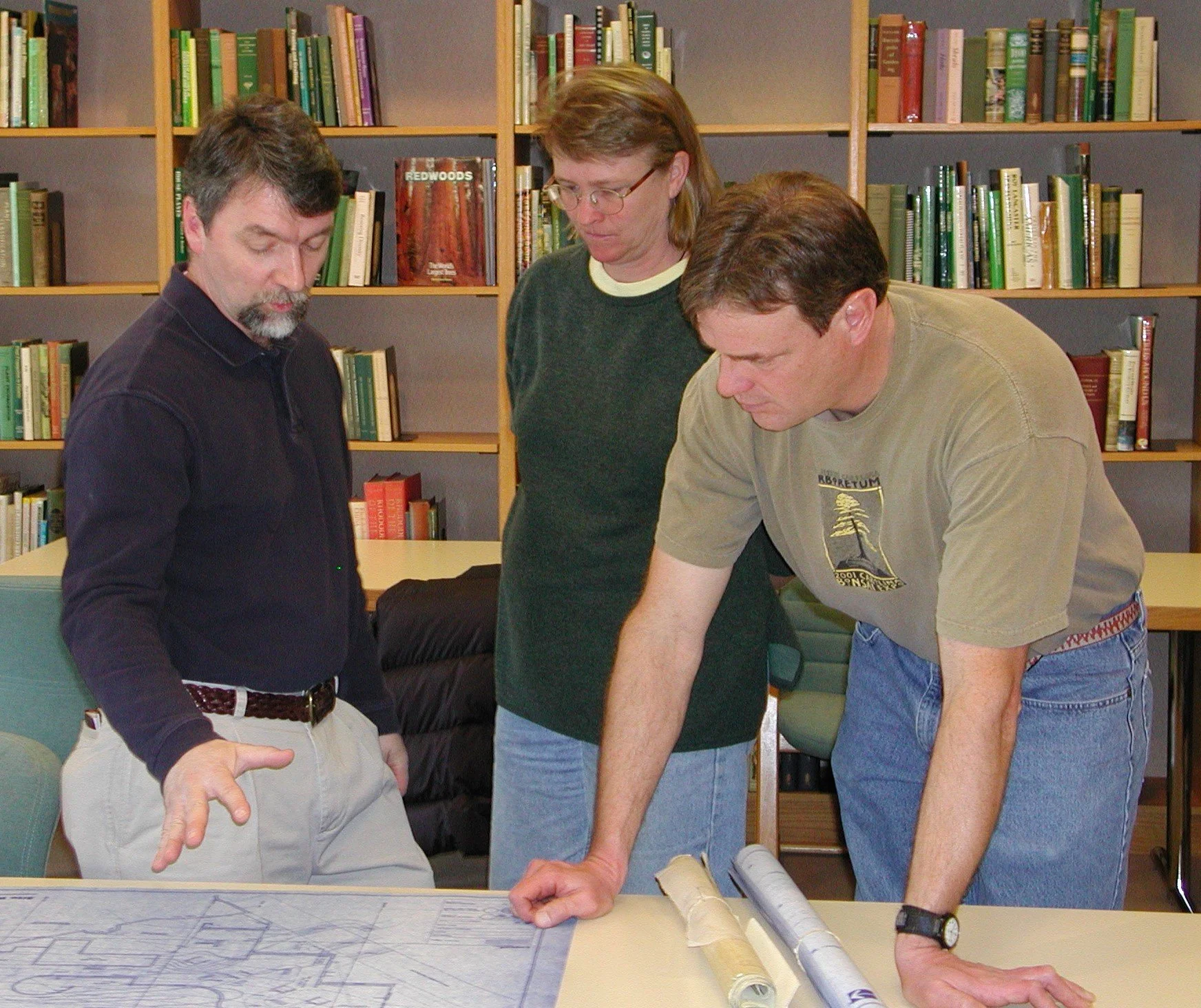
Left to right: Bill Dechant, Lead Architect; Alison Arnold, Director of Horticulture; A. Joura, Bonsai Curator
To be continued…