Designing the Bonsai Garden - Part 2
There is a fundamental difference between developments that grow from the ground-up and those that follow a top-down progression.
Evolution, which holds that all life on earth began with a single organism, is the ultimate example of the ground-up paradigm. In the beginning was one simple thing which then divided and multiplied, and in the act of doing so gradually morphed into countless other forms that built upon the original thing in a multitude of small divergent ways. Ground-up is founded on the principle of trial and error. Actions occur either haphazardly, as is the case with evolution, or are taken with an experimental spirit that is consciously focused on finding out what works and what doesn't, as is the case with true science. The ground-up method might include some notion about where development is likely to go, but such is by no means mandatory. In fact, as is the case with science, a pre-conceived outcome is often intentionally avoided because having one interferes with genuine discovery.
On the other hand, the top-down approach is epitomized by the beliefs of many world religions, which hold that there is a supreme, all-seeing, all-knowing power that has made a plan and set that plan in motion. The top-down model places great faith in planning, and, by extension, in the wisdom of authority. Authority acts out of knowledge and experience to arrange a system by which development can proceed in an orderly manner, maximizing efficiency while avoiding costly mistakes. Time and effort are invested in visualizing desired outcomes in order to devise a sequence of actions calculated to produce those outcomes, and then that sequence, or plan, is meant to be scrupulously followed. The corporate structure dominating our culture today is strongly top-down in its orientation. With the top-down method, the goal is determined first and any perceived obstacle is to be overcome.
For the sake of full disclosure, I'm more of a ground-up sort of person. People who know me, or know me through these Journal writings, will not be too surprised by this admission. It's not that I don't make plans, but I never put full faith into my own plans or those of anyone else. Human plans, despite all our belief in them and our desire that they should help us circumnavigate mistakes and conflicts, are little more than puffs of smoke blown out into the capricious winds of life. On any given day, a billion plans are dispersed into nothingness. We can't help ourselves, though. Planning seems to be integral to the experience of being human. Human planning is a central element of how the world came to be in its current condition, and I'll leave it to you, dear reader, to determine how you feel about that.
When Executive Director George Briggs put me in the leadership position on a team dedicated to planning a bonsai facility for The North Carolina Arboretum, he was taking a calculated risk. I had never before been much involved with institutional planning. I was primarily an "outside" worker, who's job description consisted of mostly physical labor, much of it done by hand. There had already, at that early stage of our existence, been untold hours of planning invested in charting the Arboretum's course into the future. Most of this careful strategizing had been led by the Executive Director, who was, in my opinion, very much a top-down sort of person. I had virtually no part in any of that planning. Bonsai had never been part of the planning, either, before a ground-up movement shoved it into the picture. Now that the institutional door had been opened to a new and unplanned possibility, the ground-up agitator behind the bonsai upsurgence was invited indoors, shown into the meeting room and given a seat at the head of the table. As was once explained to me, it's better to have a bad actor standing inside your tent spitting out, than outside your tent spitting in (I'm paraphrasing).
I think I was ready for the moment. The top-down design process was an unavoidable step in the critical path toward a bonsai facility at the Arboretum, and the Arboretum would have to have a bonsai facility if I was going to be able to do bonsai for my living. Ground-up had gotten me this far, but now the growth potential for both bonsai and me required navigating my way through the top-down maze. Accepting my new role and exercising the authority inherent in it was a critical component of making the transition from one mode of action to the other. There were all sorts of constraints along the way. Ultimately, however, I was empowered to run the process more or less the way I wanted to and I went about it with vigor and a sense of confidence not necessarily justified by experience.
For example, I never liked attending meetings and still don't. When I was leading the bonsai garden design team I was obliged not only to attend regular meetings, but to actually organize and personally conduct them, so I took the opportunity to make meetings be more the way I always thought meetings should be. When we met there was always a specific objective to be accomplished, along with the expectation that it really shouldn't take more than an hour or so to get it done. To work this way meant staying focused and not being distracted by diversions like snacks and social banter. If someone wanted to drink coffee and eat doughnuts during the meeting, they could bring those items with them and consume them as long as doing so didn't interfere with the work we were there to do. Those items weren't provided. If someone wanted to talk about a good movie they watched the night before or what they planned on doing next weekend, they could do that before the meeting started or after it was over. When conversation veered off-topic, I would unabashedly reel it back in.
People who are immersed in meeting culture will probably read this and think "Oh, so you were a jerk... Glad I wasn't in any of your meetings!" I expect some of the participants in the bonsai garden design meetings felt the same way. It didn't matter to me because I was focused on the goal, and if having meetings was necessary to reach the goal then we would have the meetings and we would get what we needed from them. This was work and it was for a specific purpose. Feathers were ruffled and subsequently smoothed, and after a while everyone adjusted and worked very well together. It's often said that the journey is more important than the goal, but this is not always true.
A great stroke of good fortune in our bonsai garden design process was the participation of Bill Dechant, our Lead Architect on the project. Bill was originally an assistant in the firm of Moody Associates, Architects, and he attended the first bonsai garden design meeting in that capacity, along with Bob Moody, principal of the business. Then Mr. Moody died unexpectedly, throwing his small company into existential disarray. The end result was that Bill went into business for himself, opening Dechant Architecture P.A., with the Arboretum's bonsai garden as his first solo project. Bill was the same age as me and we hit it off well right from the beginning. There never was an occasion when I spoke to him in earnest about some aspect of the garden design and he didn't listen thoughtfully and then do everything he could to translate my idea to his design scheme. Bill listened carefully to everyone on the team and bent over backwards to be as accommodating as possible to the swirl of input, all the while holding on to his own professional vision of how the project should go. In the end, it was Bill Dechant's vision more than anyone else's that gave the Bonsai Exhibition Garden its ultimate physical shape. The pavilion, the deck and boardwalk, the contours of the walkway, the decorative gates and window panels — all this and more arose from Bill's creative imagination. As much as the garden meant to me and to Felton Jones and all the regional bonsai community, it meant just as much to Bill. It was his first project on his own and he was banking on it to make his new business successful. He took immense pride in the work and gave it only his best.
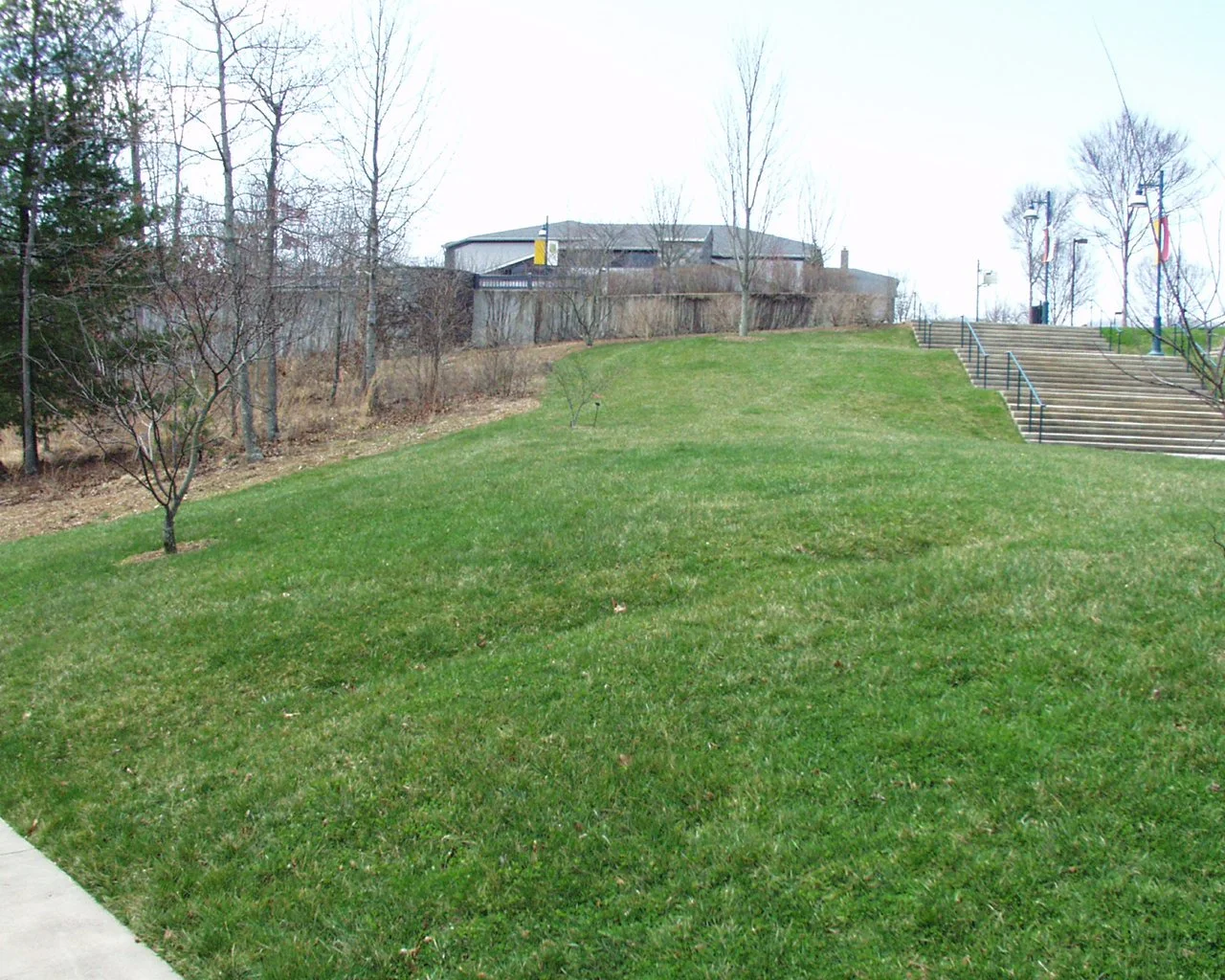
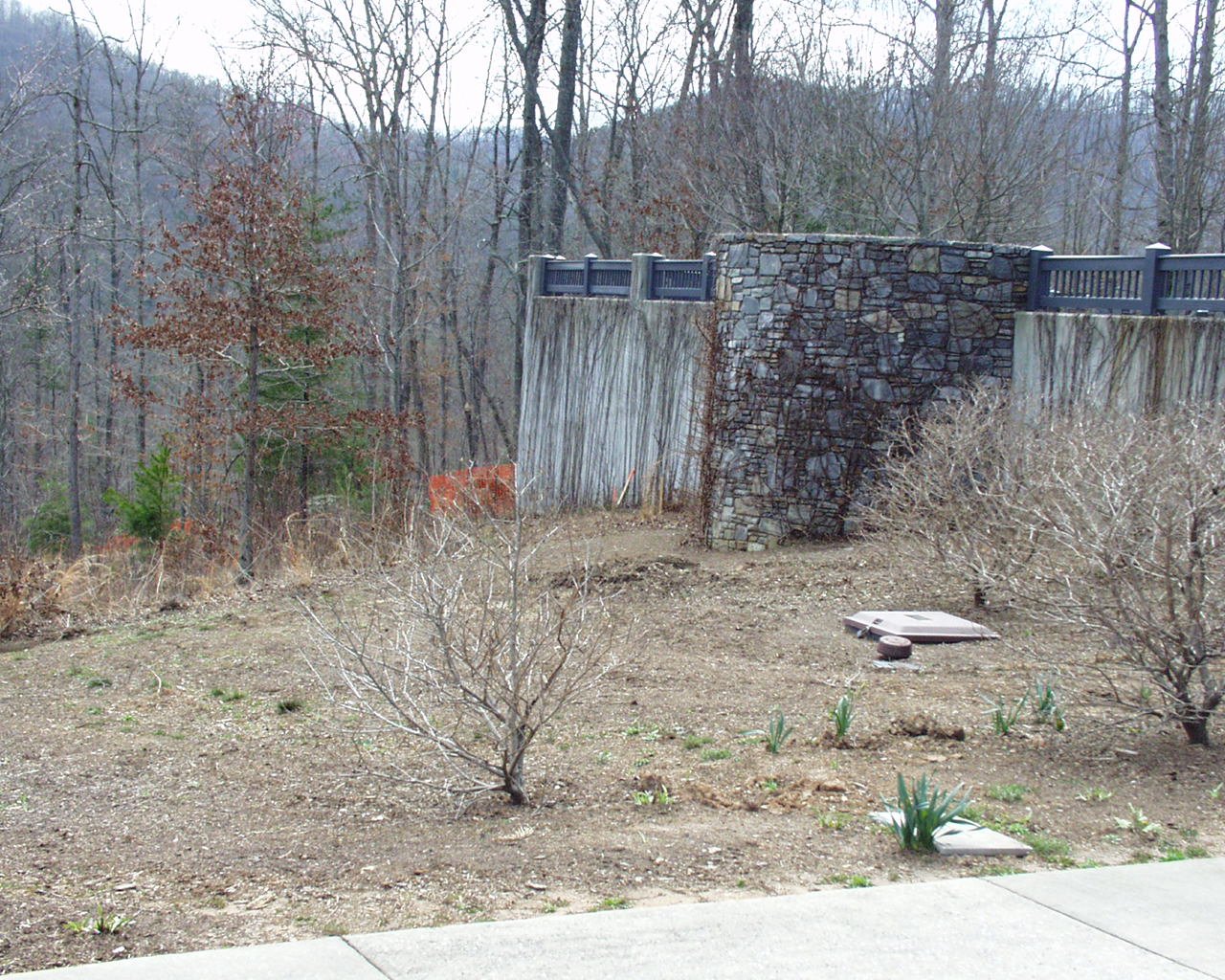
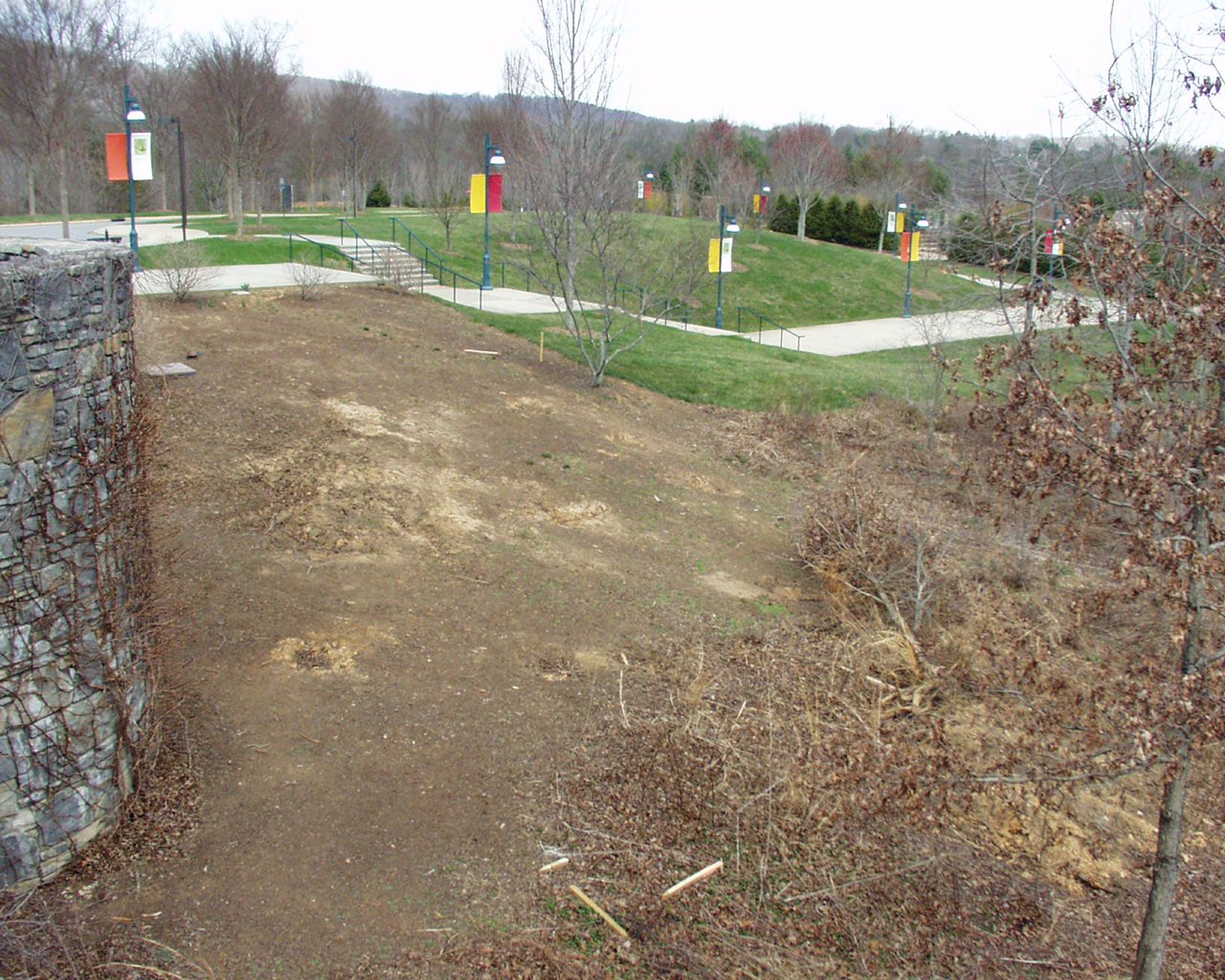
The design team met on a more or less monthly basis for an eight-month period before producing a plan that effectively laid out the basic outline of the garden’s hardscape. The term "hardscape" refers to items like buildings, walls and pathways — all the stuff that isn't alive and growing. The initial step involved going outside and looking at the site that had been selected for the garden, accessing its positive and negative features. The next step was active discussion among team members about possible ways of addressing challenges raised by the physical realities of the space, which included a steep slope and the thin, poor soil that remained after years of human disturbance. Then Bill, who had been taking copious notes, went home and worked up a first draft drawing of his ideas. At the next meeting, he unveiled his work and team members set about discussing it, dissecting it, raising questions and making suggestions. Bill took more notes, then went home again and worked up a next iteration of his plan, which was subsequently shared at the next design meeting. It went on like this meeting after meeting, month after month. Slowly, step by step, the now-familiar features of the garden took shape.
Two primary concerns, beyond those addressed in the Concept Statement, were compliance with the Americans with Disabilities Act (handicap access) and recognition of the fact that the garden was destined to be a high-traffic area for visitation. These physical and legal challenges were addressed by way of a serpentine pathway that traversed the site from top to bottom while maintaining the required grade of no more than five percent. Originally there was to be a lot of filling done on site to provide for the grade, but this idea was changed to minimize disturbance to the natural lay of the land. A deck and boardwalk was designed to carry the pathway over those places where the slope was most pronounced. The pathway was designed at a width of eight feet over its entire course to comfortably accommodate peak visitation. The entire garden was designed to be a walled and securable facility, and the capacity for bonsai display was arranged throughout the space primarily by use of a series of linear benches cantilevered off the concrete walls. It was a solid plan.
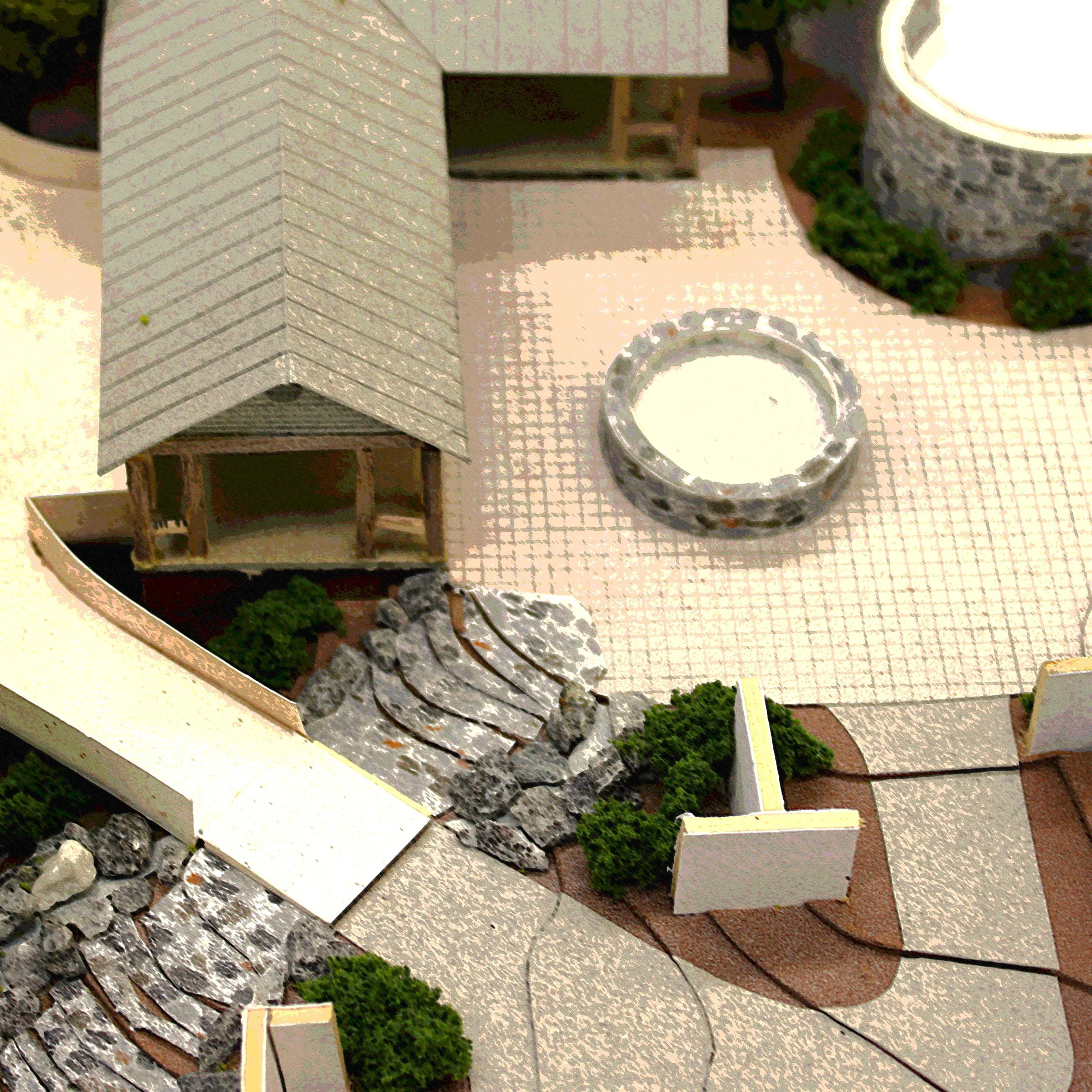
We had set out with the intention of having design drawings completed by the time of the 2001 Carolina Bonsai Expo. As it happened, we had the hardscape plan in hand before the 1999 Expo, and we were anxious to share it with the bonsai community that coalesced at the Arboretum each October for that event. Bill Dechant, true to form, went the extra mile and produced a scale model of what had been designed. This was well before the advent of 3D printing, so Bill did it the old fashioned way, by hand, with cardboard and paper, scissors and glue, little sticks of wood, gravel and other quaint materials. He did this without telling anyone, just showed up with it before the Expo so the model could be available for our bonsai supporters to see. Bill knew that most people aren't so good at reading an architectural blueprint. He was fully committed to helping the Arboretum sell this project.
To be continued...