Felton - Part 2
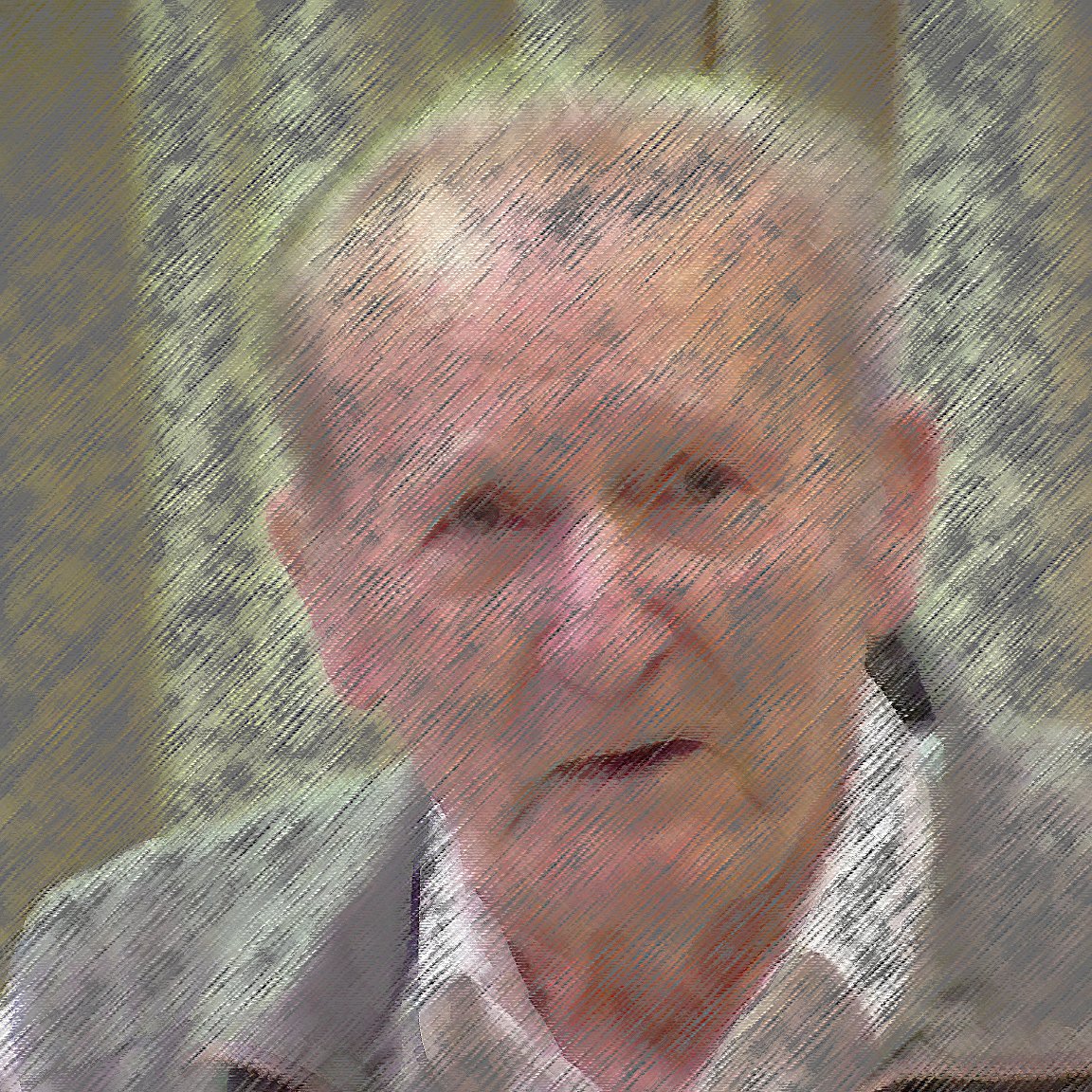
As stated earlier, I only ever knew Felton Jones as an old man. I knew him for the last twelve years of his long life and only sporadically did I spend time with him.
My view of Felton was therefore limited and what knowledge I have of his years prior to our meeting came to me mostly through third parties. I've already relayed the basic outlines of Felton's bonsai life. That story included his residence in Florida, California and Georgia, and how his life began and ended in North Carolina. He moved around more than that, though. Felton also spent time living in Washington, DC and Cleveland, Ohio, as well as a second stint in Florida in the early 1980s. He moved around between several different towns in the years he spent living in his home state, too. Then there was all the roaming Felton did as an itinerant bonsai teacher for three decades or more. I saw Felton as something of a wanderer, someone who sometimes got an itch to head on down the road somewhere and if he liked where he found himself he might stay put for a while. Sooner or later, though, he was bound to move on. That's how it was until the end, when Felton was old and broken down, more or less stuck in Durham, and that was the period in which I knew him.
Gentle. A kind soul. A sweet old man. Those were the words people usually used to describe Felton Jones, and sometimes they'd roll their eyes as they said so. One person who knew Felton well and always spoke well of him was his prize student, Rodney Clemons. Rodney and I talked once about Felton, although not at length. This was long after Felton was gone. Rodney said Felton had done some wild things in his day and had some wild stories to tell. It was difficult for me to imagine Felton being wild because in the years I knew him he was the exact opposite of that. But the way a person is at the end of their life isn't necessarily an indication of how it was for them in younger years. Duane Clayburn, a volunteer who worked with me in the early days of the bonsai program, was previously a bonsai grower in Florida, and he knew Felton from years back. He said he liked Felton and thought he was a good teacher. Duane also shared some other impressions, and these had to do with how Felton seemed to have no visible means of support. Nice guy, Duane said. He'd give you the shirt off his back, but I don't know how he kept body and soul together for himself. I don't think he had two nickels to rub together. It seemed like other people were always putting him up and taking care of him. Bonsai was the only work I knew him to do and don't see how he could have lived on what he made doing that!
By all appearances, Felton lived modestly. His clothes were plain and simple — polyester dress slacks and a collared shirt, often covered by a safari vest with large pockets, all clean, well worn and comfortable. There was no fat on Felton and he seemed to eat little. He was a smallish man and so slight it looked like a strong wind would blow him down the street. He wore aviator-style glasses and kept his thinning gray hair swept neatly back on his head. Felton drove an old white Plymouth station wagon that looked like it dated to the 1960s, although it might have been as recent as the early 70s. I never went to Felton's house, but heard the place was old, rundown and had seen better days, which seemed about right.
After Felton's demonstration at the first Carolina Bonsai Expo, I found myself walking a tightrope in my dealings with him. I knew for certain I wouldn't be putting him on stage again, but like everyone else I respected his experience, thought he was a nice old man, and most of all didn't want to hurt his feelings. He was always good to me and it was easy enough to spend time with Felton. All you had to do was listen. He liked to tell stories about the old days in Florida and California, the days of his youth, and the people he knew then. Sometimes the stories had a point and sometimes they didn't, but they usually rambled on a bit and often segued seamlessly into other stories. After a while Felton would say something like, Well, I've talked enough. Look how late it's gotten. I know you're a busy man and I shouldn't be holding you up like this. I'd shrug and tell him it was no problem and then he'd wander on into another story.
Initially I didn't have occasion to see Felton very often because Asheville and Durham are a four-hour drive apart. I encountered him when I went to Raleigh to make my annual presentation to the Triangle group and I'd run into him again at the Expo, which he always attended. Then one day I received a phone call from Felton, telling me he had some plants he thought I'd be interested in and could he come visit so he might deliver them. I said sure. He turned up in his old station wagon and the back of the vehicle was full of plant material. The first time he came what he brought were random treasures he had kicking around his place — gang pots of little seedlings or rooted cuttings, and a few larger, more developed plants in their own containers, which were individuals he thought had potential for bonsai development. Felton, like most people who get serious into bonsai but even more so, had a yard full of plants in pots and couldn't resist propagating and collecting more. He was glad to have a place to unload his excess leafy friends and I was glad to have them for my Arboretum work.
That first visit turned out to be the start of a phase that would go on for several years. Felton would come to the Arboretum to visit with me and he would never show up empty handed. Over time he would gift the Arboretum more plants, including some established bonsai from his own collection, in addition to bonsai containers and high-quality display stands, artwork, old magazines and lots of books. I told him he didn't have to always be bringing donations, that if he wanted to just come visit sometimes for social reasons he could do that. I figured the social aspect was what mattered most because talking with him made it plain that Felton felt old, lonely and forgotten.
My relationship with Felton soon came to include more telephone calls, as picking up the phone was easier than driving halfway across the state. As time passed the calls became more frequent and they came to me both at work and at my home. I soon came to learn that there was no such thing as a brief phone call with Felton, that his habit of conversation in that circumstance was the same as it was when speaking with him in person. Felton liked to talk. He might start out with some bit of information he wanted to convey or question he needed to ask, but then that would be followed with a bit of bonsai community gossip, perhaps, or his views on some recent development in the bonsai world. Then Felton would slip into reminiscing and there was no end to that.
I didn't have much to say when on the phone with Felton and there wasn't much need for me to say anything. If our conversation went on for an hour and a half, which was fairly standard, my speaking part might amount to ten minutes or so in total. I just listened and made appropriate vocal noises now and then to let him know I was still on the line. If the call came to me while at work, I'd ask Felton to hang on a minute and then I'd go grab a little tree that needed pruning and bring it back to my office. Then I'd sit there with the receiver cradled between my neck and shoulder, not having a speaker phone, and work on the tree while Felton talked. People who happened by my office door while this was going on would look in and laugh. After a while they knew without asking who was on the other end of the line. If the call came when I was home I would just lay down somewhere and listen. Sometimes the call would come at night when I was reading bedtime stories to my young children. If the boys heard me say “Hello Felton” when I picked up the phone, one of them would call out from the bedroom, "Goodnight Dad!"
To be continued...